
Find Address with a Free Phone Number Lookup: A Complete Guide

By Razib Mojumder
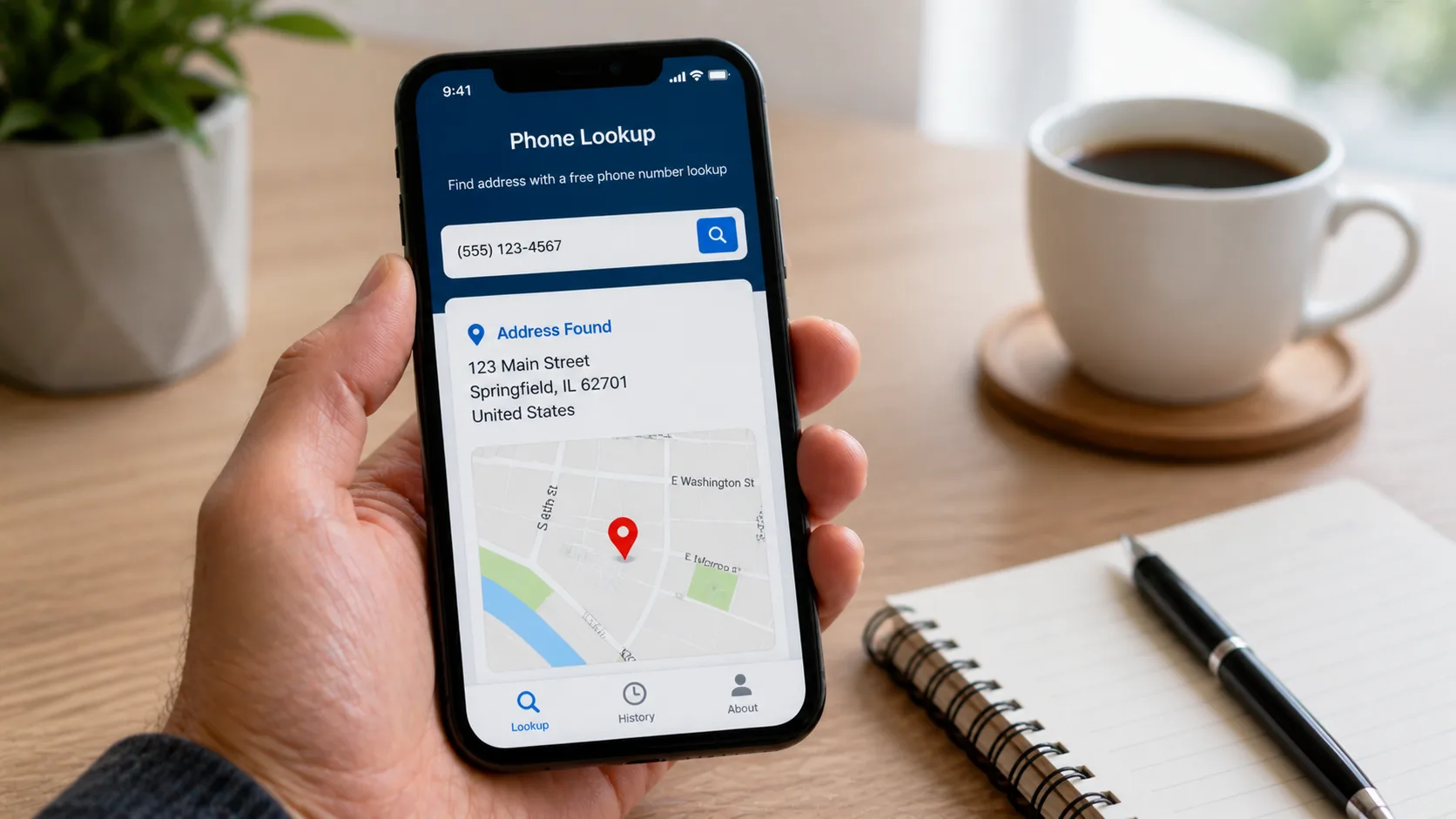
You’ve got a phone number but need the address behind it. Maybe it’s an old friend you lost touch with, a business contact whose card you misplaced, or someone who’s been calling you repeatedly. Whatever your reason, finding an address from a phone number is more accessible than you might think.
The landscape of phone number lookups has changed dramatically over the past few years. What used to require hiring a private investigator or having law enforcement connections can now be done from your smartphone in minutes. But here’s the catch: not all methods work equally well, and some “free” services will waste your time with outdated information or try to upsell you at every turn.
This guide cuts through the noise and shows you exactly how to find address information using phone number lookup services, both free and paid options that deliver real results.
Understanding Phone Number Lookup Services
Phone number lookup services pull data from multiple sources to connect a phone number with personal information, including addresses. These services aggregate information from public records, social media profiles, data brokers, and user-submitted directories.
The quality of results depends heavily on several factors:
- Phone number type: Landlines typically provide more reliable address matches than cell phones
- How long the number has been active: Newer numbers may not have extensive records yet
- Public record availability: Some states restrict access to certain types of personal information
- Number portability: People who’ve transferred numbers between carriers or moved frequently are harder to track
Most legitimate services maintain databases with billions of records, updating them regularly as new public information becomes available. The best ones cross-reference multiple data points to verify accuracy before displaying results.
Free Methods to Find an Address from a Phone Number
Google Search: The Starting Point
Before spending money, try a simple Google search. Type the phone number in quotes (“555-123-4567”) to search for exact matches. This works surprisingly well for:
- Business phone numbers listed on websites
- Numbers posted in online directories or classified ads
- People who’ve shared their contact information publicly on social media
Add location keywords if you have them: “555-123-4567 Chicago” narrows results considerably.
Social Media Platforms
Facebook, LinkedIn, and Instagram allow phone number searches, though the feature isn’t always obvious. Facebook’s search function can find profiles linked to phone numbers if the person hasn’t restricted their privacy settings.
LinkedIn works particularly well for professional contacts. Search the phone number in quotes within the platform, or use Google with the modifier “site:linkedin.com” followed by the number.
Twitter’s search function can uncover numbers people have shared in tweets, though this method works better for finding context about a number rather than current addresses.
Reverse Phone Lookup Directories
Several established directories offer basic reverse phone lookups at no charge:
Whitepages provides free basic searches showing the carrier, location, and sometimes a name. Full address details typically require a paid membership, but the free results often give you enough information to continue your search elsewhere.
TrueCaller relies heavily on user-submitted data. If enough people have identified a number in their contacts, you might see name and location information. The service works better in some countries than others.
411.com offers free reverse lookups for landlines with relatively detailed results, including addresses for many listings. Cell phone results are more limited.
Info: Free services usually show partial information as a teaser. You might see “John S.” and “Chicago, IL” but need to pay for the complete “John Smith, 123 Main Street, Chicago, IL 60601.”
Public Records Searches
County and state websites sometimes offer free access to:
- Property records (if you know the general area)
- Court records
- Voter registration databases (in some states)
- Business registrations
These methods work better when you have additional information beyond just the phone number. If your initial search revealed a name and city, public records can fill in the address details.
Paid Services That Deliver Results
When free methods don’t cut it, paid services offer more comprehensive data and higher accuracy. Here’s what you get for your money and which services perform best.
Comparison of Top Paid Lookup Services
| Service | Single Search Price | Monthly Subscription | Data Accuracy | Address Results | Report Speed |
|---|---|---|---|---|---|
| Intelius | $0.95 (trial) | $24.86/month | High | Detailed | Instant |
| BeenVerified | $1 (trial) | $26.89/month | High | Detailed | Instant |
| Spokeo | $0.95 (trial) | $24.95/month | Medium-High | Good | Instant |
| TruthFinder | N/A | $27.78/month | High | Detailed | 1-2 minutes |
| Instant Checkmate | N/A | $34.78/month | Medium | Good | 1-3 minutes |
What Paid Services Include
Premium phone lookup reports typically contain:
- Current and previous addresses: Often going back 10-20 years
- Full name and age: More reliable than free services
- Associated people: Relatives, roommates, or business partners
- Email addresses: Both current and historical
- Social media profiles: Linked accounts across platforms
- Property records: Ownership details if they own real estate
- Criminal records: Depending on the service and state laws
Pros:
- Comprehensive results in one report
- Updated databases with recent information
- Customer support when results are unclear
- Money-back guarantees from reputable providers
- Batch search options for multiple numbers
Cons:
- Monthly subscriptions can be expensive if you only need one search
- Some services auto-renew aggressively
- Data accuracy varies by region
- Results may include outdated addresses mixed with current ones
- Privacy concerns about your own information being searchable
Mobile Apps for Address Lookup
Smartphone apps offer convenient on-the-go lookup capabilities, though they generally provide less detailed results than desktop services.
Truecaller (Free with ads, $2.99/month premium) The app identifies incoming calls and allows reverse lookups. Strong community database makes it particularly effective for spam identification. Address information appears when available from user submissions.
Caller ID & Number Locator (Free with in-app purchases) Shows caller location on a map and provides name lookup. Limited address details in free version, but good for quick location identification.
NumBuster ($9.99 one-time fee) No subscription required. Searches multiple databases simultaneously and presents consolidated results. Decent address hit rate for landlines.
Sync.ME (Free) Pulls data from social networks and public sources. Works well for people who maintain active online profiles. Address results are hit-or-miss but completely free.
Specialized Techniques for Difficult Searches
For Disconnected Numbers
Numbers no longer in service pose special challenges. Try these approaches:
Search newspaper archives and online announcements from when the number was active. Wedding announcements, obituaries, and local news often include phone numbers with addresses.
Check the Wayback Machine (archive.org) for cached versions of business websites or personal pages that may have listed the number with location details.
Contact the phone carrier directly. While they won’t release personal information, they might confirm whether the number ever existed in their system and general location area.
For VoIP and Internet Phone Numbers
Voice over IP numbers (Google Voice, Skype numbers, etc.) are trickier because they’re not tied to physical locations. However:
- Google Voice numbers often link back to personal Gmail accounts searchable through social media
- Business VoIP systems sometimes appear in company directories with physical addresses
- Area codes can still provide regional clues, even if the person doesn’t live there
For Cell Phones Without Public Listings
Cell phones represent about 70% of all phone numbers but have lower hit rates in traditional directories. Increase your chances by:
Searching the number across all social media platforms systematically. Many people link cell numbers to Facebook, Instagram, and WhatsApp without realizing these associations are sometimes searchable.
Checking professional networking sites. LinkedIn, industry-specific forums, and alumni directories often contain contact information people wouldn’t share elsewhere.
Looking for the number in leaked database compilations. While ethically questionable, several security breaches have exposed phone-to-address data that appears in search engines.
Legal and Ethical Considerations
Before you start searching, understand the legal boundaries. The Fair Credit Reporting Act (FCRA) restricts how you can use personal information obtained through lookup services.
Legal uses include:
- Reconnecting with old friends or family
- Verifying business contacts
- Identifying unknown callers to your own phone
- Skip tracing for legitimate debt collection (with proper licensing)
- Background checks for tenant screening (with consent)
Illegal uses include:
- Stalking or harassment
- Identity theft
- Employment decisions without FCRA compliance
- Discrimination in housing or services
- Any purpose involving fraud
Most legitimate services require you to agree to terms of service certifying you won’t use the information for prohibited purposes. Violations can result in civil liability and criminal charges under federal and state laws.
Privacy Protection: Keeping Your Own Information Private
If you’re concerned about others finding your address through your phone number, take these steps:
Opt out of data broker sites: Major lookup services like Whitepages, Spokeo, and BeenVerified offer opt-out processes. You’ll need to submit requests individually to each service.
Use separate numbers for public listings: Google Voice or other VoIP services provide free numbers you can list publicly while keeping your personal cell private.
Adjust social media privacy settings: Ensure your phone number isn’t publicly searchable on Facebook, LinkedIn, and other platforms.
Register with the Do Not Call Registry: While this won’t hide your address information, it reduces unwanted contact at (888) 382-1222.
Consider phone number replacement: If your number has been widely distributed or compromised, changing it and being selective about who receives the new one provides the strongest protection.
What to Do When Searches Come Up Empty
Not every phone number search yields results. Common reasons include:
- The number is brand new or recently transferred
- It belongs to someone who maintains strict privacy
- It’s a burner phone or temporary number
- The owner has successfully opted out of databases
- It’s an international number outside US database coverage
When standard searches fail, you have limited options:
Reach out directly: Call or text the number explaining why you need the address information. People often respond when approached honestly.
Hire a professional: Licensed private investigators have access to databases and techniques beyond consumer services. Expect to pay $50-300 depending on search complexity.
Wait and monitor: New information appears in databases regularly. A search that fails today might succeed in three months.
Accept limitations: Some people successfully maintain privacy, and that’s their right. Persistent attempts to circumvent someone’s privacy protections cross ethical lines.
Accuracy and Verification
Phone lookup results aren’t always accurate. Data aggregation involves pulling from multiple sources with varying update frequencies. Verify important information through multiple methods:
Cross-reference results from at least two different services. If Spokeo and BeenVerified show the same address, confidence increases significantly.
Check property records directly through county assessor websites if the service indicates the person owns property at the listed address.
Use Google Street View to verify the property type matches what you’d expect (residential vs. business, single-family vs. apartment complex).
Consider the timestamp on the information. An address from 2019 might still be current, but one from 2013 probably isn’t.
For critical situations (legal matters, important deliveries, etc.), confirm the address through direct contact before relying on lookup results.
Alternatives to Address Lookup
Sometimes finding an address isn’t actually what you need. Consider these alternatives:
Email lookup: If you need to contact someone, their email address might serve your purpose better than their physical address. Many lookup services find email addresses more reliably than current addresses.
Social media messaging: Direct messaging through Facebook, LinkedIn, or Instagram reaches people without needing their address or even their current phone number.
Mutual connections: If you share contacts with the person, asking a mutual friend might yield faster, more accurate results than any database.
Professional services: For business contacts, a company’s main line or website contact form often connects you more efficiently than tracking down home addresses.
Can I find someone’s address with just their cell phone number for free?
Yes, but with limitations. Free services like Google search, social media lookups, and basic reverse phone directories often provide city-level location or partial address information. Complete street addresses typically require paid services. Your success depends heavily on whether the person has shared their information publicly or appears in accessible databases. Landlines generally yield better free results than cell phones.
How accurate are phone number lookup services?
Accuracy varies by service and phone number type. Top-tier paid services like Intelius and BeenVerified report 85-90% accuracy for landlines and 60-75% for cell phones. The main issues are outdated information (people move but old addresses remain in databases) and data aggregation errors. Always verify critical information through multiple sources or direct contact. Free services typically have lower accuracy rates, often showing information that’s several years old.
Is it legal to look up someone’s address using their phone number?
Yes, using phone lookup services is legal for most purposes including reconnecting with old contacts, identifying unknown callers, or verifying business information. However, using the information for harassment, stalking, identity theft, or FCRA-regulated purposes (employment, credit, housing) without proper authorization is illegal. Most services require you to certify compliance with applicable laws before accessing results. When in doubt, consult the service’s terms of use and relevant state privacy laws.
Why do some phone numbers not return any address information?
Several factors prevent successful lookups: the number might be too new to appear in databases, the owner may have opted out of data broker services, it could be a VoIP or burner number without permanent location ties, or the person maintains strict privacy practices. International numbers often fall outside US database coverage. Additionally, some demographic groups (younger people, renters, recent movers) appear less frequently in public records than homeowners with long-term residence.
What’s the difference between free and paid phone lookup services?
Free services typically provide basic information like carrier name, general location (city/state), and sometimes partial names. They often use this teaser information to encourage paid upgrades. Paid services offer complete addresses (current and historical), full names, associated people, additional contact information, property records, and consolidated reports from multiple data sources. Paid services also update their databases more frequently and provide customer support. For one-time searches, free methods combined with manual research often suffice. For comprehensive or multiple searches, paid services save significant time.
The right approach to finding an address from a phone number depends on your specific situation, budget, and how much information you already have. Start with free methods, be patient with the search process, and remember that some people successfully maintain privacy—which you should respect. When you do find the information you need, use it responsibly and within legal boundaries.
Editorial Standards & Fact Checking
At NumLocate, our telecommunications and privacy guides are independently researched, cross-referenced with official FCC guidelines and carrier numbering plans, and reviewed to ensure consumer safety and accuracy.

Written by Razib Mojumder
Telecommunications & Digital Privacy Specialist
Razib is the lead researcher at NumLocate, specializing in caller ID authentication protocols, STIR/SHAKEN anti-spoofing frameworks, and practical digital privacy tools for everyday consumers.
Related Articles
 Phone Lookup
What Does Scam Likely Mean on Caller ID?
TL;DR “Scam Likely” on your caller ID is a warning label that your phone carrier automatically displays when an incoming call is suspected to be fraudulent or a scam. Major carriers like T-Mobile, AT&T, and Verizon use call analytics technology to identify suspicious calling patterns and flag these numbers before you answer. When you see […]
 Phone Lookup
Why Do Old Phone Numbers Have New Owners?
TL;DR Old phone numbers get reassigned to new owners because telecommunications carriers recycle disconnected numbers after a waiting period to manage the limited supply of available phone numbers. When someone cancels their service, switches carriers, or stops paying their bill, their number enters a holding period before returning to the available pool. This recycling process […]
 Phone Lookup
What Can an Area Code Tell You About a Phone Number?
TL;DR An area code reveals the geographic region where a phone number was originally assigned, whether it’s a landline or mobile number, and can help identify potential spam or scam calls. While area codes once definitively indicated a caller’s physical location, number portability and VoIP services have made this information less reliable. Area codes can […]