
Free Reverse Phone Lookup vs Paid Services: Which to Choose

By Razib Mojumder
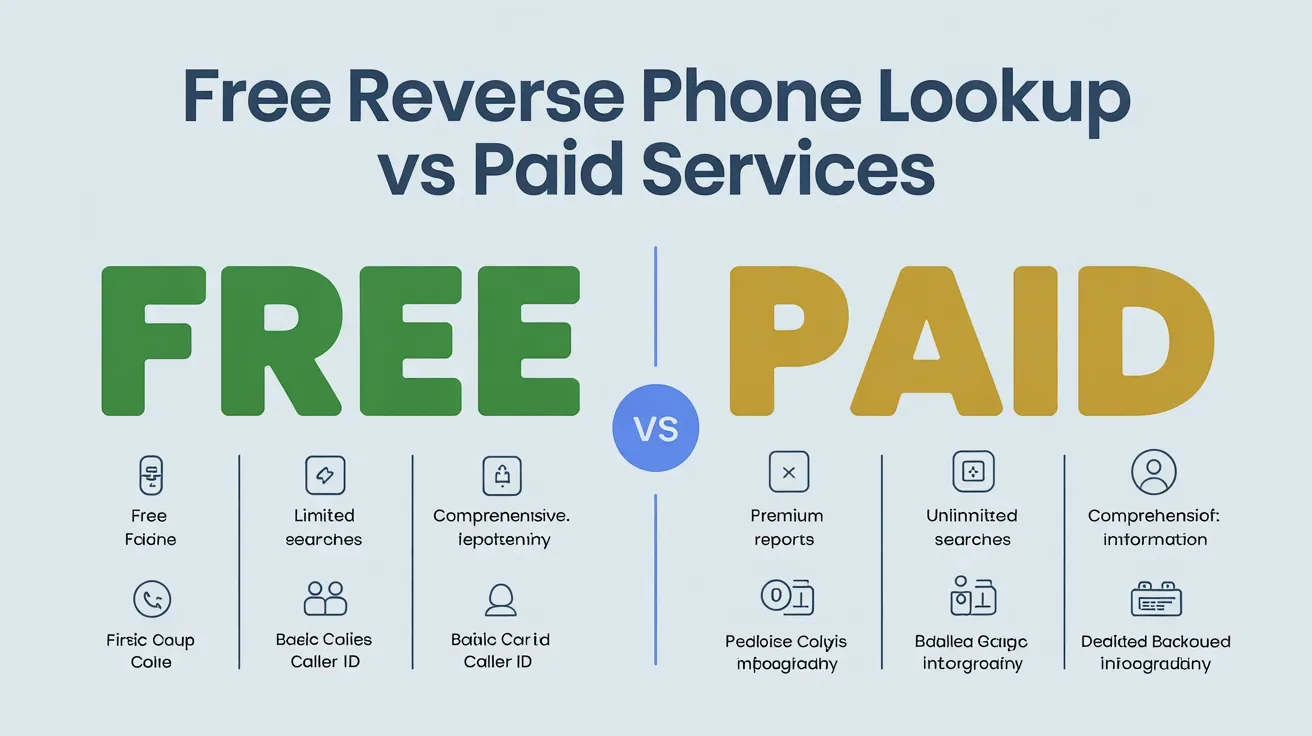
When an unknown number shows up on your phone at 2 AM, your first instinct is probably to search for it online. You’ll find dozens of websites promising “100% free reverse phone lookup” with just a click. Here’s what most people don’t realize: these free services rarely give you the full picture.
Free reverse phone lookup tools typically offer basic caller ID information. You might see the general location (city and state), carrier information, and whether it’s a landline or mobile number. Some services pull data from public directories and user-submitted reports. That’s usually where the trail ends.
The business model is straightforward: free services hook you with limited information, then ask you to upgrade for the complete report. You’ll see teasers like “23 records found” or “Full name available with premium access.” This isn’t necessarily deceptive—maintaining databases and verifying information costs money.
What Free Reverse Phone Lookup Services Actually Provide
Let’s talk specifics about what you can expect without opening your wallet:
Basic Information You’ll Get
Location Data: Most free services will tell you the area code’s geographic region. A 212 number? That’s New York City. A 305? Miami. But this doesn’t necessarily mean the caller is physically there—number portability means people keep their numbers when they move.
Carrier Information: You can usually identify whether the number belongs to Verizon, AT&T, T-Mobile, or another carrier. This helps distinguish between mobile phones and landlines.
Spam Reports: Free community-driven databases like 800notes or WhoCalledMe rely on user reports. If 50 people flagged a number as a telemarketer, you’ll see those warnings.
Line Type: Whether it’s a mobile, landline, VoIP, or toll-free number. This alone can tell you a lot—legitimate businesses often use toll-free numbers, while scammers frequently rotate through VoIP lines.
What You Won’t Get
Info: Free services almost never provide the owner’s name, complete address, email addresses, social media profiles, criminal records, or detailed background information. These data points require access to premium databases and verification systems.
The gap between free and paid becomes obvious when you need to identify a specific person. Free tools might confirm your suspicion that a number is spam, but they won’t help you track down a old friend or verify a business contact’s legitimacy.
The Real Cost of Paid Reverse Phone Lookup Services
Paid services range from $0.95 for a single lookup to monthly subscriptions costing $30-50. The pricing varies wildly based on what you’re getting:
Single Report Pricing
| Service Type | Typical Cost | What’s Included |
|---|---|---|
| Basic Single Report | $0.95 – $2.95 | Name, address, carrier info |
| Comprehensive Report | $5.95 – $9.95 | Name, address, relatives, email addresses |
| Deep Background Check | $19.95 – $39.95 | Full background, criminal records, social profiles |
| Monthly Unlimited | $24.95 – $49.95 | Unlimited searches for 30 days |
What Justifies The Cost?
Paid services tap into proprietary databases that aggregate information from:
- Public records (property deeds, court filings, voter registrations)
- White pages directories
- Social media cross-references
- Credit header information (not full credit reports)
- Professional databases
- Historical phone number records
They also employ verification teams to confirm accuracy. When you’re paying $19.95 for a background report, part of that covers the cost of ensuring the John Smith at 123 Main Street is actually the person who owns that phone number, not one of the other 47,000 John Smiths in the database.
When Free Reverse Phone Lookup Is Good Enough
You don’t always need to spend money. Here are situations where free tools handle the job perfectly:
Identifying Obvious Spam: If you just want to know whether to block a number that’s called three times today, free spam databases will tell you immediately. You’ll see reports like “IRS scam” or “Fake Amazon security alert” within seconds.
Quick Location Checks: Expecting a call from a Dallas business partner but got a 415 area code? A free lookup confirms that’s San Francisco, not Dallas. Red flag identified, no payment required.
Preliminary Research: Before committing to a paid service, free tools let you determine if there’s any information available at all. Some numbers simply won’t yield results anywhere—disconnected lines, very new numbers, or international calls.
Casual Curiosity: Maybe you found an old number in your contacts and can’t remember who it belongs to. If you’re just mildly curious rather than genuinely concerned, free tools satisfy that itch.
Pros:
- Zero financial risk
- Instant results for basic information
- Adequate for identifying robocalls and spam
- No subscription commitments or stored payment information
- Good starting point before investing in paid services
Cons:
- Extremely limited personal information
- Often leads to upgrade prompts
- Data may be outdated or incomplete
- No customer support if information is wrong
- Cannot verify identity with confidence
When You Should Pay For A Reverse Phone Lookup
Some situations demand more than free tools can offer:
Safety and Security Concerns
If someone is harassing you, threatening you, or making you feel unsafe, you need real answers. Free services won’t cut it. You need to know exactly who’s behind that number so you can file a proper police report or obtain a restraining order.
Law enforcement takes reports more seriously when you can provide a name, address, and verifiable information. A paid service that delivers a comprehensive background check gives you those details.
Business Verification
You’re about to wire $5,000 to a contractor who gave you a mobile number. Should you trust them? A paid lookup can reveal:
- Whether the number is associated with a registered business
- If there are complaints or lawsuits tied to that person
- Their actual business address (not just a P.O. Box)
- How long they’ve had that number
- Other business names they’re associated with
For a $20 investment, you could save thousands by identifying a scammer before money changes hands.
Reconnecting With People
Free services won’t help you find your college roommate from 15 years ago. If you have an old phone number and want to locate someone, paid databases cross-reference current addresses, email addresses, and even social media profiles. They track people through moves, name changes, and number changes.
Dating and Personal Safety
Meeting someone from a dating app? You have their phone number but want to verify they are who they claim to be. Paid services can reveal:
- Their real full name
- Age and birthday
- Current address
- Criminal history
- Social media profiles to compare photos
This isn’t paranoia—it’s common sense. Catfishing and romance scams are real problems, and a $10 background check offers peace of mind.
Professional Due Diligence
Hiring a nanny, renting property to a tenant, or partnering in a business venture? These relationships require trust, and trust requires verification. Paid services provide the depth of information you need to make informed decisions about who you’re letting into your life or business.
Accuracy: The Biggest Difference Between Free and Paid
Here’s something most comparison articles won’t tell you: accuracy rates vary dramatically.
Free reverse phone lookup services pull from public databases that might be months or years out of date. They don’t have verification systems. If someone moved six months ago, the free service might still show their old address. If they changed their name, that update might not appear for a year.
Paid services update their databases constantly—often daily. They use algorithms to verify information across multiple sources. If Jane Doe got married and became Jane Smith, paid databases will catch that change within weeks through marriage records, property transfers, and other public filings.
Accuracy matters enormously. Imagine confronting someone about harassing calls only to discover you had the wrong person because your free lookup gave you outdated information. Or missing out on reconnecting with an old friend because the free service showed their number as disconnected when they actually just switched carriers.
Privacy Considerations You Need to Know
Free services make money somehow, and it’s not always transparent:
Data Harvesting: Some free lookup sites collect your search queries and sell that data to marketers. You searched for a number? Now you’re in a database as someone interested in background checks, potentially opening you up to targeted ads or worse.
Email Collection: “Enter your email for results” is a common tactic. Your email address becomes part of their marketing list, sold to third parties.
Browser Tracking: Free sites often have aggressive tracking pixels and cookies that follow you around the internet.
Paid services, especially reputable ones, have privacy policies and reputations to protect. They’re less likely to engage in shady data practices because they have a legitimate business model: you pay money, they provide a service.
The Middle Ground: Trial Offers and Single Reports
You don’t have to choose between completely free or expensive monthly subscriptions. Several options exist in between:
$1 Trial Periods: Some services offer 5-day trials for $1, giving you access to unlimited searches. The catch? You must cancel before the trial ends or you’ll be charged the full monthly rate (usually $30-40). Set a phone reminder for day 4.
Single Report Purchases: Pay $5-10 for just one comprehensive report. No subscription, no recurring charges. This works well if you only need to look up one or two numbers.
Credit-Based Systems: Buy credits in bulk at a discount. Maybe you pay $25 for 5 searches instead of $10 each. The credits don’t expire, so you can use them whenever needed.
How to Evaluate Which Option You Need
Ask yourself these questions:
How urgent is this? If someone is threatening you, pay for the comprehensive report now. If you’re just curious about a number that called once, try free first.
What do you already know? If you have a name and just want to confirm the number matches, free tools might work. If you only have a number and need everything else, go paid.
What’s the financial impact? If this involves money—a business deal, a rental agreement, a wire transfer—the cost of a paid report is insurance against fraud.
How private do you need this search to be? Free services leave digital footprints. Paid services often have better privacy protections.
Do you need ongoing access? If you’re a landlord, private investigator, or business owner who regularly needs to verify people, a monthly subscription makes financial sense. For one-off needs, single reports work better.
Real-World Scenarios: What Actually Works
Scenario 1: Daily Robocalls
Sarah gets three calls a day from the same unknown number. She checks a free reverse phone lookup site, immediately sees 200+ spam reports identifying it as a Medicare scam. She blocks the number. Winner: Free service
Scenario 2: Potential Business Partner
Mike is considering partnering with someone he met at a conference. The person wants to form an LLC together. Mike pays $19.95 for a comprehensive background check and discovers his potential partner has two bankruptcies and a fraud lawsuit. Winner: Paid service
Scenario 3: Old Friend
Lisa has her college roommate’s old phone number from 2015. Free services show it’s disconnected. She pays $7.95 for a single report, gets the current number and address, and they reconnect after 10 years. Winner: Paid service
Scenario 4: Wrong Number
David keeps getting texts meant for someone else. Free lookup shows it’s a mobile number from his area code. That’s all he needed to know—it’s just a wrong number, not spam. Winner: Free service
What The Data Actually Reveals
Paid reverse phone lookup services access dozens of data sources:
Phone carrier records show current and historical ownership, though carriers don’t sell customer names directly—this comes from cross-referencing with other databases.
Public records include property ownership, marriage licenses, divorce decrees, court filings, and professional licenses. These are public information but scattered across thousands of county and state databases. Paid services aggregate them.
Credit header information isn’t your credit score or full credit report, but it includes names, addresses, and phone numbers associated with someone’s credit file.
Social media cross-referencing matches phone numbers to profiles. Many people list their phone numbers on Facebook, LinkedIn, or Instagram—paid services scan these.
Utility and services connections like magazine subscriptions, membership organizations, and warranty registrations often include phone numbers.
The magic is in the aggregation and verification. A single piece of information from one source might be wrong. But when 15 different sources all confirm John Smith at 123 Main Street owns the number (555) 123-4567, you can trust that information.
Red Flags With Any Service (Free or Paid)
Some warning signs indicate a service isn’t trustworthy:
Guaranteed results: No legitimate service can promise they’ll find information on every number. Burner phones, brand new numbers, and international calls often yield nothing.
Instant full reports without payment: If a site claims to show you everything free, they’re lying. You’ll hit a paywall.
No refund policy: Reputable paid services offer money-back guarantees if they can’t find any information.
Vague privacy policies: If you can’t easily find how they use your data, assume the worst.
Too-good-to-be-true pricing: A $1 comprehensive background check that includes criminal records? Not possible. Real data costs money.
Mobile Apps vs Websites: Does Format Matter?
Mobile apps often provide more limited information than full websites, even from the same company. They’re designed for quick spam identification rather than comprehensive research.
Apps like Truecaller excel at identifying spam calls in real-time using crowdsourced data—essentially a free service. But for detailed background information, you’ll still need to visit a full website and likely pay.
The advantage of apps is convenience and real-time caller ID. The disadvantage is depth of information.
Making Your Decision
Start with free reverse phone lookup services for basic identification. They’ll tell you if a number is spam, the general location, and the carrier. This handles 70% of situations where you just need quick reassurance.
Move to paid services when:
- You need to identify a specific person
- Safety is a concern
- Money is involved
- You’re making an important decision based on who owns the number
- Free services return no useful information
- You need verified, current data
Don’t pay for monthly subscriptions unless you have ongoing needs. Single reports or trial periods make more sense for most people.
The choice isn’t really between free and paid—it’s about matching the tool to the situation. Free services are tools for quick identification. Paid services are comprehensive verification systems. Use each where it fits best.
Can free reverse phone lookup services really find anyone?
No. Free services only access limited public databases and user-submitted reports. They work well for identifying spam numbers and getting basic location info, but they won’t reveal personal details like names, addresses, or background information for most numbers. If you need to identify a specific person, you’ll need a paid service.
Are paid reverse phone lookup services worth the money?
It depends on your situation. For quick spam identification, free services work fine. But if you’re dealing with harassment, verifying someone’s identity before a business deal, or trying to reconnect with someone, paid services ($5-20 per search) are absolutely worth it. They access proprietary databases with verified, current information that free services simply can’t provide.
How accurate are reverse phone lookup services?
Paid services are significantly more accurate than free options. Free services might have data that’s months or years old, while paid services update their databases daily or weekly. Paid services also cross-reference multiple data sources to verify information. Accuracy rates for reputable paid services typically exceed 85% for numbers that have sufficient data available.
Can I do a reverse phone lookup without the person knowing?
Yes, both free and paid reverse phone lookups are passive searches—you’re looking up information in databases, not contacting the person. They won’t receive any notification that you searched their number. However, be aware that some free services may share your search data with third parties for marketing purposes, so check privacy policies.
What should I do if a reverse phone lookup returns no information?
This happens with new numbers, burner phones, VoIP lines, or international numbers. Try multiple services—different companies access different databases. If you still get nothing, the number might be too new to appear in databases, or it could be a temporary number that won’t have associated records. In these cases, even paid services might not help.
Understanding Your Real Options
The reverse phone lookup industry thrives on confusion. Companies blur the lines between free and paid, hoping you’ll get frustrated with limited free results and upgrade. Understanding what each type actually delivers helps you skip the frustration.
Free services serve a legitimate purpose—they’re crowd-sourced spam identification tools that work remarkably well for that specific function. They’re not designed to be comprehensive background check systems.
Paid services are background check companies that happen to offer phone number searches as one data point among many. You’re not paying for phone lookup alone—you’re paying for access to databases that compile information from hundreds of sources.
Both have their place. Neither is universally better. The question isn’t which to choose—it’s which matches what you actually need right now.
Editorial Standards & Fact Checking
At NumLocate, our telecommunications and privacy guides are independently researched, cross-referenced with official FCC guidelines and carrier numbering plans, and reviewed to ensure consumer safety and accuracy.

Written by Razib Mojumder
Telecommunications & Digital Privacy Specialist
Razib is the lead researcher at NumLocate, specializing in caller ID authentication protocols, STIR/SHAKEN anti-spoofing frameworks, and practical digital privacy tools for everyday consumers.
Related Articles
 Phone Lookup
What Does Scam Likely Mean on Caller ID?
TL;DR “Scam Likely” on your caller ID is a warning label that your phone carrier automatically displays when an incoming call is suspected to be fraudulent or a scam. Major carriers like T-Mobile, AT&T, and Verizon use call analytics technology to identify suspicious calling patterns and flag these numbers before you answer. When you see […]
 Phone Lookup
Why Do Old Phone Numbers Have New Owners?
TL;DR Old phone numbers get reassigned to new owners because telecommunications carriers recycle disconnected numbers after a waiting period to manage the limited supply of available phone numbers. When someone cancels their service, switches carriers, or stops paying their bill, their number enters a holding period before returning to the available pool. This recycling process […]
 Phone Lookup
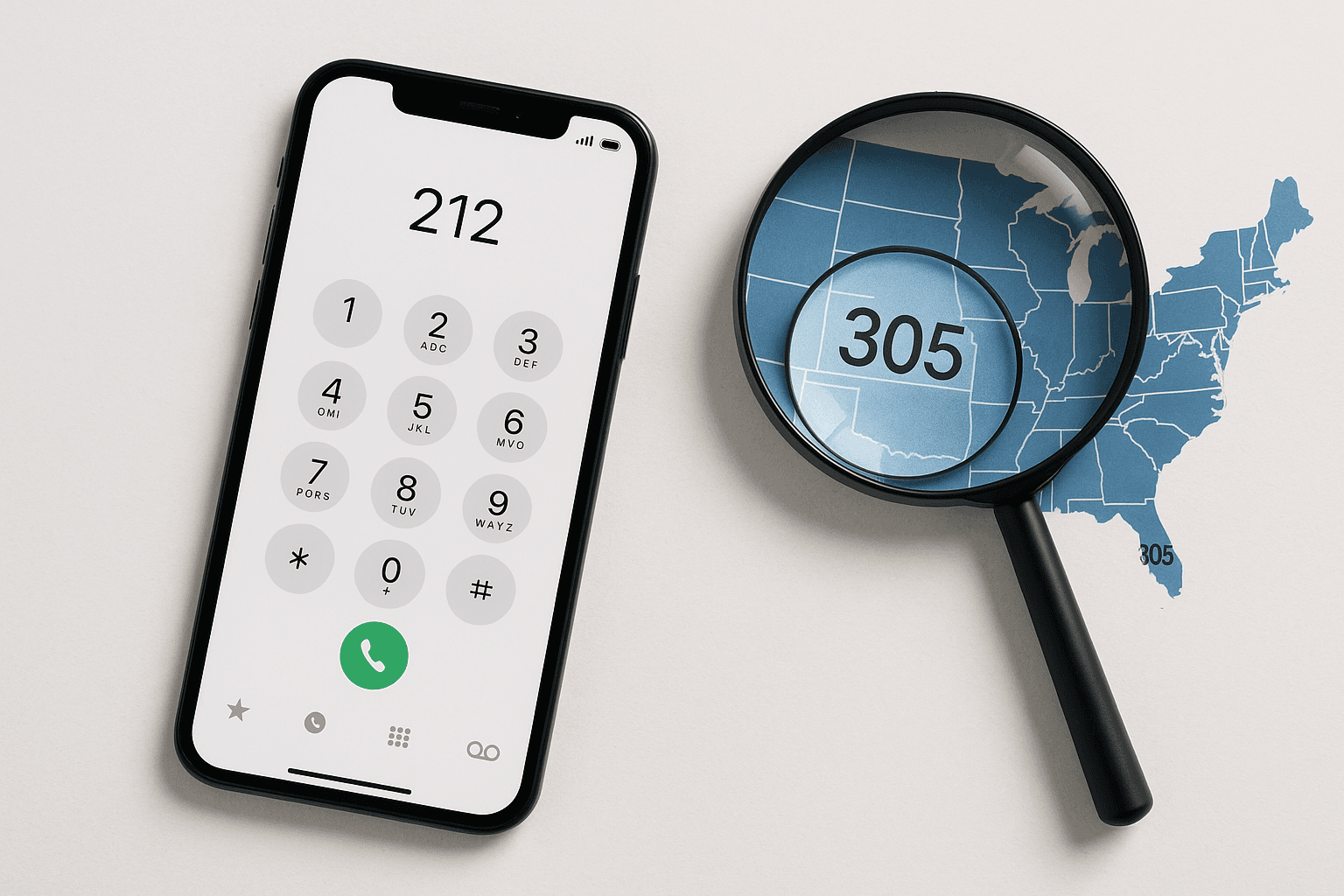
What Can an Area Code Tell You About a Phone Number?
TL;DR An area code reveals the geographic region where a phone number was originally assigned, whether it’s a landline or mobile number, and can help identify potential spam or scam calls. While area codes once definitively indicated a caller’s physical location, number portability and VoIP services have made this information less reliable. Area codes can […]