
How Reverse Phone Lookup Protects Against Scammers

By Razib Mojumder
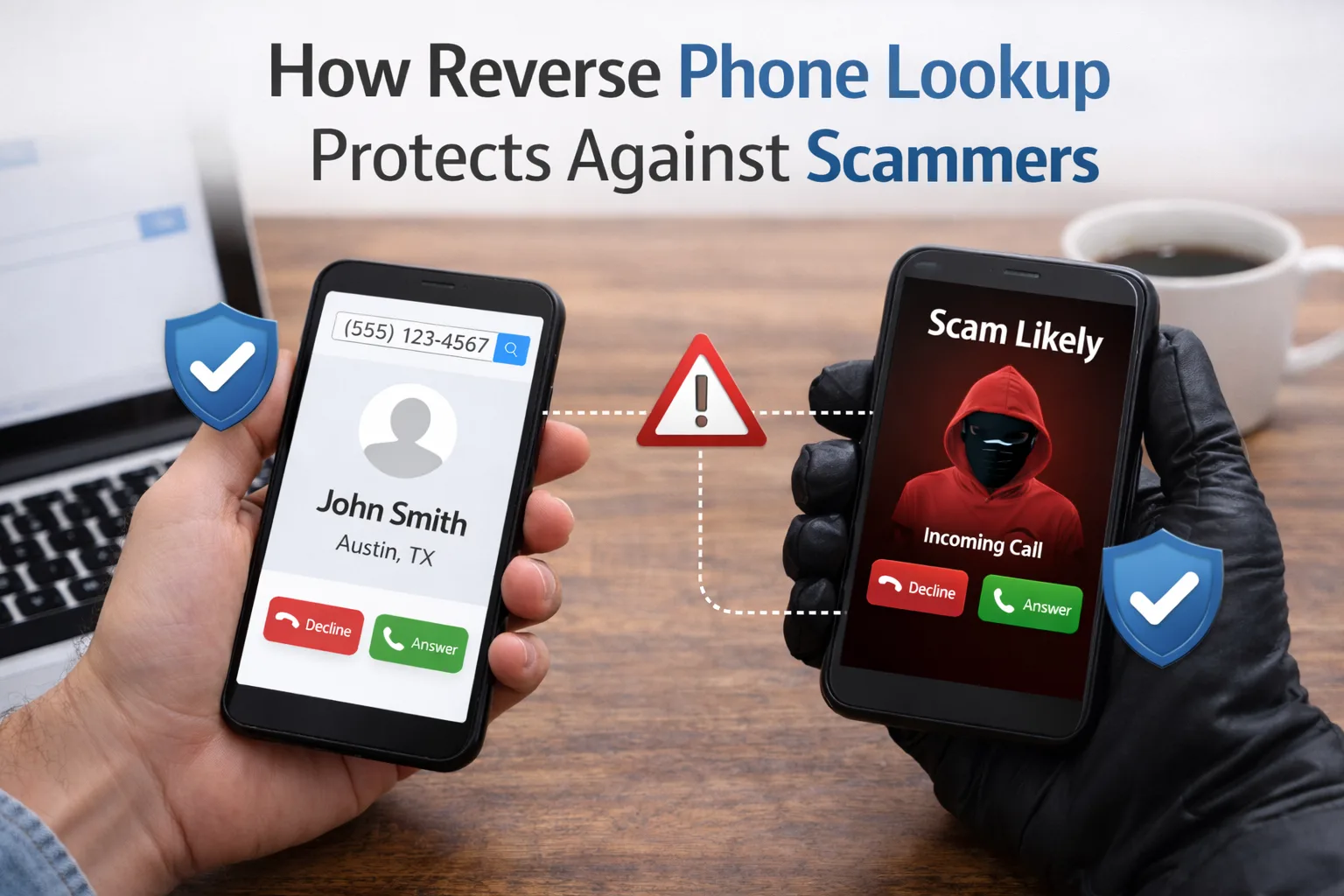
You’re sitting down to dinner when your phone rings. The number looks local, but you don’t recognize it. You answer, and within seconds, someone’s trying to convince you that your car warranty is about to expire—except you drive a 15-year-old sedan that never had a warranty to begin with.
Sound familiar? Americans received over 50 billion spam calls in 2024, with scammers stealing an estimated $29.8 billion from victims. The good news? You have more power to fight back than you might think.
Reverse phone lookup has become one of the most effective tools for identifying and blocking scammers before they can do damage. Here’s exactly how it works and why it’s become essential for protecting yourself in an era where your phone number is currency for criminals.
What Makes Phone Scams So Dangerous Right Now
Scammers have gotten disturbingly sophisticated. They’re not just calling anymore—they’re texting, spoofing local numbers, and using AI to clone voices. The FTC reported that imposter scams alone cost Americans $2.7 billion in 2023.
The tactics have evolved:
- Neighbor spoofing: Scammers display local area codes to increase answer rates by up to 400%
- Voice cloning: AI can replicate a family member’s voice from just 3 seconds of audio
- Smishing attacks: Text-based scams that appear to come from banks, delivery services, or government agencies
- One-ring scams: Missed calls designed to trick you into calling expensive international numbers
The average scam call gets answered because it looks legitimate. By the time you realize something’s wrong, the scammer already has you engaged in conversation—and they’re trained to keep you there.
How Reverse Phone Lookup Works as Your First Line of Defense
A reverse phone lookup does exactly what it sounds like: instead of searching for a number by name, you search for information about who owns a specific number. But the technology behind it has become far more powerful than simple directory lookups.
Modern phone number lookup tools pull data from:
- Public records databases
- Social media profiles
- Business registrations
- User-reported scam databases
- Telecom carrier information
- Historical call pattern data
When you enter an unknown number, the service cross-references these sources and delivers a profile that typically includes the caller’s name, location, phone carrier, and most importantly—whether others have reported it as a scam.
The Real-Time Scam Detection Advantage
What makes reverse phone lookup particularly powerful is the crowd-sourced element. When thousands of people report the same number as fraudulent, that data gets added to databases within hours. This means you can check a number and see if 200 people reported it as an IRS impersonation scam just yesterday.
This real-time reporting creates a network effect that traditional caller ID can’t match.
Five Ways Reverse Phone Lookup Stops Scammers Cold
1. Identifying Spoofed Numbers Before You Answer
Scammers frequently use number spoofing to make their calls appear local. You see a number with your area code and assume it’s legitimate. But here’s what they can’t fake: the registration details behind that number.
When you run a reverse phone lookup on a suspicious number, you’ll often discover:
- The number is registered to a VOIP service commonly used for scams
- The location doesn’t match the area code (a “local” 212 New York number actually originates from overseas)
- The number was activated within the last few days (a red flag for burner numbers)
- Multiple scam reports from other users
2. Exposing Common Scam Patterns
Certain phone number patterns practically scream “scam.” Reverse lookup tools help you spot these immediately:
VOIP and burner phone indicators: Legitimate businesses use traditional phone lines. Scammers use cheap VOIP services they can abandon quickly.
Sequential number blocks: If a lookup shows the number is part of a block of sequential numbers (like 555-0100 through 555-0200), that’s often a telemarketing or scam operation that purchased numbers in bulk.
No historical data: A phone number with zero digital footprint—no business listings, no social media connections, no previous owner information—is highly suspicious for anything claiming to be an established company.
3. Verifying Legitimate Business Contact
Here’s where reverse phone lookup becomes particularly valuable: confirming that the number calling you actually belongs to who they claim to be.
Let’s say you get a call from someone claiming to represent your bank about suspicious activity. Instead of engaging, you:
- Take down the number
- Hang up politely
- Run a reverse lookup
- Compare the results to your bank’s official contact numbers
If the lookup shows the number belongs to a VOIP service in another state, you’ve just dodged a scam. If it matches your bank’s registered business line, you can call back through official channels to verify.
Pro tip: Never call back a suspicious number directly, even if the lookup seems legitimate. Instead, find the official number through the company’s website and contact them that way.
4. Protecting Elderly Family Members
Seniors lose more money to phone scams than any other age group—an average of $1,500 per incident. Setting up reverse phone lookup tools for elderly parents or grandparents creates a safety net.
You can:
- Add reverse lookup browser extensions to their computers
- Show them how to text suspicious numbers to you for checking
- Set up call-blocking apps that automatically screen against known scam databases
- Create a simple reference sheet: “If you don’t recognize the number, look it up before answering”
Many adult children have stopped scams by getting a quick text: “Mom, someone called from 555-0123 about my Medicare. Should I call back?” A 30-second lookup prevents a potential disaster.
5. Building Evidence for Reporting and Blocking
When you identify a scam number, the information from your reverse lookup becomes evidence. You can report it to:
- The Federal Trade Commission (FTC)
- The Federal Communications Commission (FCC)
- Your phone carrier’s spam reporting system
- Scam tracking databases that feed into reverse lookup services
Each report strengthens the database for the next person who searches that number. You’re not just protecting yourself—you’re helping protect everyone.
Comparing Different Reverse Phone Lookup Approaches
| Method | Speed | Accuracy | Cost | Best For |
|---|---|---|---|---|
| Free online services | Instant | 60-70% | Free | Quick checks of common scammers |
| Paid lookup platforms | Instant | 85-90% | $0.95-$30/month | Frequent users needing detailed reports |
| Carrier-provided tools | Instant | 70-80% | Usually free | Basic caller ID and spam warnings |
| Smartphone apps | Instant | 75-85% | Free-$10/month | Real-time call screening |
| Manual Google search | 2-5 minutes | Variable | Free | Cross-referencing when you have time |
Red Flags That Reverse Lookup Reveals
When you run a phone number lookup, certain details should immediately raise your guard:
The number has dozens of recent scam reports: If a number shows 50+ reports in the past week, it’s actively being used for fraud. Don’t even consider answering.
VOIP service from overseas: A number claiming to be the “Social Security Administration” that traces back to a VOIP provider in Eastern Europe? Absolute scam.
Disconnected or invalid: If the lookup shows the number doesn’t actually exist in the phone system, it’s spoofed. Scammers can make your caller ID display literally any number.
Recently activated with high call volume: A number that was activated two days ago but already has hundreds of outbound calls? That’s a scam operation burning through numbers quickly.
Mismatched location data: Someone claims to be calling from your local bank branch, but the number lookup shows it’s registered in a different state entirely.
What Scammers Don’t Want You to Know
Professional scammers rely on three things: speed, emotion, and ignorance. They want you to act before you think.
Reverse phone lookup destroys their playbook because it gives you:
- Time to think: Taking 30 seconds to look up a number interrupts their pressure tactics
- Objective information: You see facts instead of falling for their story
- Pattern recognition: You realize this is the same scam 500 other people reported
The moment you say “Let me call you back after I verify this number,” professional scammers hang up. They know you’re about to look them up, and they’d rather move on to someone who won’t.
Beyond Basic Lookup: Advanced Protection Strategies
Once you’re comfortable with basic reverse phone lookup, you can level up your protection:
Set up automatic screening: Many smartphone apps integrate reverse lookup databases directly into your call screening. Suspected scam calls get automatically flagged or blocked before your phone even rings.
Create a personal blacklist: Keep a running list of numbers that fail your lookup tests. Most phones let you block numbers permanently.
Monitor your number’s exposure: Some reverse lookup services offer “reverse reverse” monitoring—they’ll alert you if your phone number appears in scam databases, meaning scammers are spoofing it.
Use multiple lookup sources: No single database is perfect. Cross-reference suspicious numbers across 2-3 different lookup services for the most accurate picture.
Check text message numbers too: SMS scams (smishing) are exploding in frequency. Run the same lookups on suspicious text message sender numbers.
The Hidden Cost of Not Using Reverse Lookup
Skipping a quick phone number lookup might seem harmless, but consider what’s at stake:
- The average phone scam victim loses $1,400
- Identity theft from phone scams takes 200+ hours to resolve
- Emotional scams targeting elderly victims often result in depression and anxiety
- Once scammers have you on the hook, they share your number with other criminals
Compare that to the 30 seconds it takes to run a lookup. The math is overwhelmingly in your favor.
Real-World Success Stories
A retired teacher in Florida received a call from someone claiming to be her grandson, saying he’d been arrested and needed bail money immediately. The voice sounded right, and she was panicked. Before wiring $5,000, she ran the callback number through a reverse lookup service. It showed a VOIP number registered in another country with 80+ scam reports. She called her actual grandson—he was fine, at work, completely unaware.
A small business owner got repeated calls from “Google Business Services” offering to update his listing. The persistent caller had his business details correct, which seemed legitimate. A quick reverse lookup revealed the number had been reported 200+ times for a fake Google services scam. He blocked it and reported it to the FTC.
These aren’t rare cases. Similar stories happen thousands of times daily, but only for people who took the time to verify.
When Reverse Lookup Shows “Unknown” or Limited Data
Not every lookup will return a complete profile, and that’s okay. Limited information still tells you something:
If there’s no data at all: Proceed with extreme caution. Legitimate businesses and individuals leave digital footprints. Ghosts are suspicious.
If it shows a valid person but seems off: The number might be spoofed. Scammers sometimes rotate through real people’s numbers to avoid detection.
If it’s a landline in a residential area: Could be legitimate, but verify independently if they’re claiming to represent a business.
The absence of information is information. When in doubt, don’t engage.
How accurate are reverse phone lookup services for identifying scammers?
Accuracy varies by service, but reputable reverse phone lookup platforms correctly identify known scam numbers 85-90% of the time. They’re most accurate with numbers that have been reported multiple times by users. The key is using services that update their databases regularly—daily updates are ideal. No service is 100% perfect, which is why you should combine reverse lookup with other verification methods like calling the company back through official channels.
Can scammers tell if I’ve looked up their phone number?
No, scammers cannot detect when you perform a reverse phone lookup on their number. These searches are completely private and one-way. The lookup service queries databases and returns information to you without notifying the number’s owner. This is one of the safest ways to investigate suspicious calls without alerting potential scammers that you’re onto them.
Is it legal to use reverse phone lookup to check unknown numbers?
Yes, using reverse phone lookup services is completely legal. These services only access publicly available information and user-reported data. You have every right to research who’s calling you. In fact, the Telephone Consumer Protection Act (TCPA) supports your right to know who’s contacting you and to block unwanted calls. Just use the information for personal safety, not for harassment or illegal purposes.
What should I do after confirming a number is a scam through reverse lookup?
First, block the number on your phone to prevent future calls. Second, report it to the FTC at ReportFraud.ftc.gov and the FCC at fcc.gov/complaints. Third, report it within the reverse lookup service you used so other users benefit from the information. If the scammer claimed to represent a specific company, notify that company’s fraud department. Finally, never call the number back or engage with them in any way.
Do free reverse phone lookup services work as well as paid ones?
Free services can identify obvious scammers that have been widely reported, but paid services typically offer more comprehensive data, including carrier information, location history, and associated names. Free services might show “spam likely” for a number with 100 reports, while paid services could reveal it’s a VOIP number registered overseas with links to specific scam operations. For occasional lookups, free services work fine. For frequent use or detailed investigations, paid services provide better protection.
Making Reverse Lookup Part of Your Daily Routine
The most effective use of reverse phone lookup isn’t reactive—it’s preventative. Here’s how to integrate it seamlessly:
Install a lookup app on your smartphone: Keep it one tap away for instant checks.
Teach your family: Make sure everyone in your household knows how to use reverse lookup, especially teenagers and elderly relatives who are common targets.
Check before you answer: If you don’t recognize a number, let it go to voicemail. Look it up before deciding whether to return the call.
Trust your instincts: If something feels off about a call, it probably is. Run the lookup even if you’re not sure.
Stay updated: Scam tactics evolve constantly. Check scam alert databases periodically to learn about new schemes.
The scammers are counting on you to answer blindly, to act emotionally, to trust too quickly. Reverse phone lookup is your way of taking back control. It’s not paranoid—it’s smart. In a world where your phone number is a gateway to your bank account, your identity, and your peace of mind, knowing who’s really on the other end of the line isn’t just helpful.
Editorial Standards & Fact Checking
At NumLocate, our telecommunications and privacy guides are independently researched, cross-referenced with official FCC guidelines and carrier numbering plans, and reviewed to ensure consumer safety and accuracy.

Written by Razib Mojumder
Telecommunications & Digital Privacy Specialist
Razib is the lead researcher at NumLocate, specializing in caller ID authentication protocols, STIR/SHAKEN anti-spoofing frameworks, and practical digital privacy tools for everyday consumers.
Related Articles
 Phone Lookup
What Does Scam Likely Mean on Caller ID?
TL;DR “Scam Likely” on your caller ID is a warning label that your phone carrier automatically displays when an incoming call is suspected to be fraudulent or a scam. Major carriers like T-Mobile, AT&T, and Verizon use call analytics technology to identify suspicious calling patterns and flag these numbers before you answer. When you see […]
 Phone Lookup
Why Do Old Phone Numbers Have New Owners?
TL;DR Old phone numbers get reassigned to new owners because telecommunications carriers recycle disconnected numbers after a waiting period to manage the limited supply of available phone numbers. When someone cancels their service, switches carriers, or stops paying their bill, their number enters a holding period before returning to the available pool. This recycling process […]
 Phone Lookup
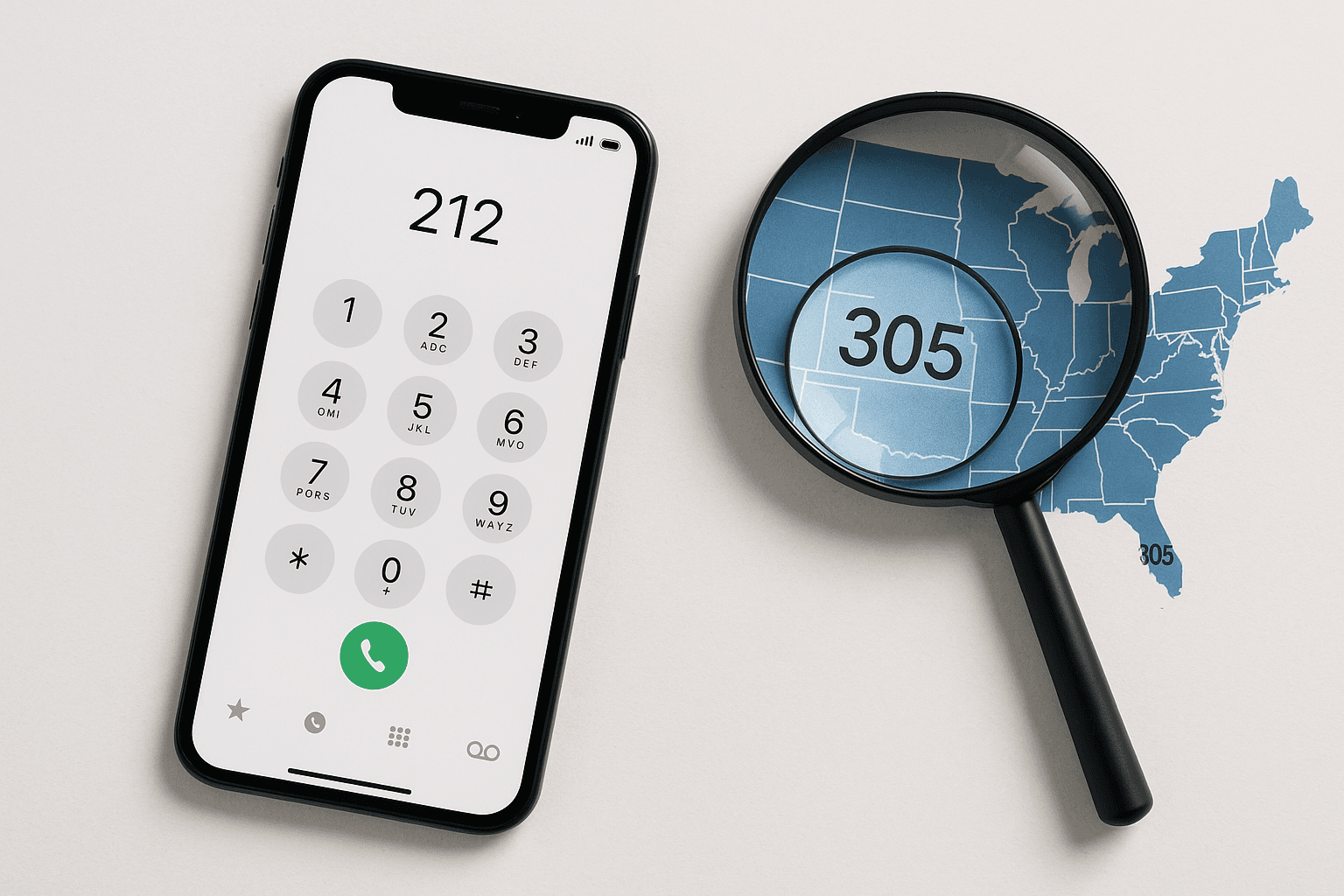
What Can an Area Code Tell You About a Phone Number?
TL;DR An area code reveals the geographic region where a phone number was originally assigned, whether it’s a landline or mobile number, and can help identify potential spam or scam calls. While area codes once definitively indicated a caller’s physical location, number portability and VoIP services have made this information less reliable. Area codes can […]