
Free Cell Phone Number Lookup With Name – No Charge Methods That Actually Work

By Razib Mojumder
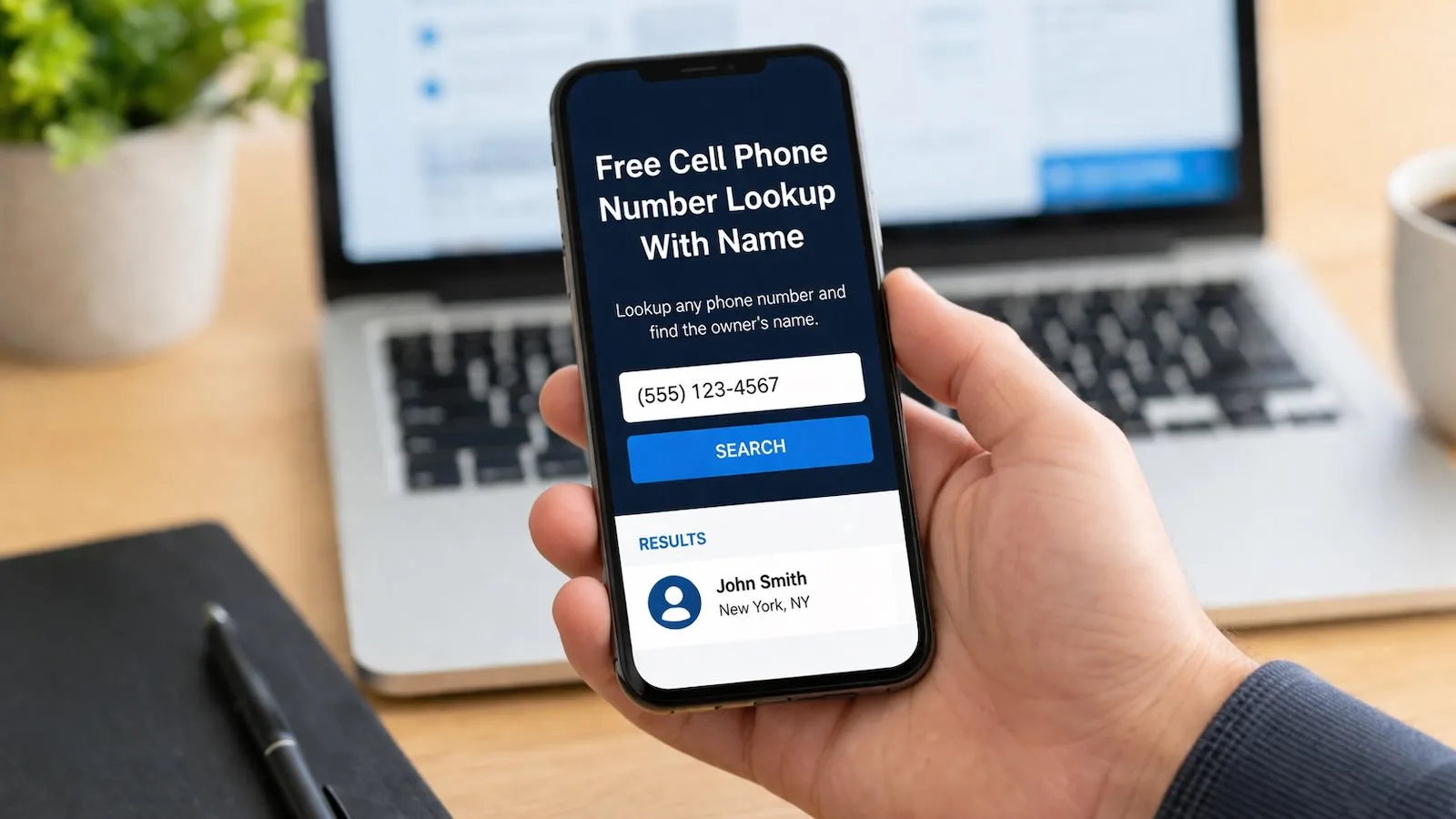
You’ve got a mysterious number calling you at odd hours, or maybe you need to verify a contact before a business meeting. Finding out who’s behind a phone number shouldn’t require emptying your wallet, yet countless websites promise “free” lookups before hitting you with surprise charges.
The good news? Several legitimate methods exist to identify cell phone numbers without spending a dime. The catch is knowing which tools deliver real results versus which ones waste your time with outdated databases and bait-and-switch tactics.
Understanding What Free Phone Number Lookups Can (and Can’t) Do
Before searching, set realistic expectations. Free services typically provide basic information like the carrier, location, and line type (mobile vs. landline). Premium details such as full names, addresses, and background reports usually require payment.
Most free phone number lookup tools access public records, social media profiles, and user-contributed databases. The quality of results depends heavily on whether the number’s owner has shared information publicly or if others have reported it.
Info: Numbers registered to businesses or listed in public directories yield better results than private cell phones with strict privacy settings.
Top Free Cell Phone Lookup Methods
NumLocate – Fast and Simple Number Identification
NumLocate stands out as one of the most straightforward free options available. Just enter the phone number and you’ll get instant access to carrier information, location data, and line type without creating an account.
What makes this tool particularly useful is its clean interface – no confusing navigation or hidden paywalls. You see what information is available immediately. For many searches, especially when you simply need to verify if a number is legitimate or identify spam callers, this provides exactly what you need.
The service works particularly well for:
- Identifying the general location of unknown callers
- Checking if a number is a cell phone or landline
- Verifying carrier information before switching services
- Quick spam number verification
Search Engine Reverse Lookup
Google remains one of the most underutilized phone lookup tools. Simply entering a number in quotes (“555-123-4567”) can reveal surprising information:
- Business listings and company names
- Social media profiles where the number appears
- Online classified ads or marketplace posts
- Forum discussions about spam numbers
- Reviews mentioning the number
This method works especially well for business numbers or people who’ve shared their contact information publicly. Type the number exactly as it appears, including area code and hyphens for best results.
Social Media Platform Searches
Facebook, LinkedIn, and Instagram allow phone number searches through their “Find Friends” or search features. While success rates vary based on privacy settings, you’d be surprised how many people link their phone numbers to social profiles.
Facebook method:
- Enter the phone number in the search bar
- Check results for profile matches
- Look at mutual friends or location for verification
LinkedIn approach:
- Use the search function with the full number
- Check company pages if it’s a business line
- Review professional profiles that match the number’s location
Carrier Lookup Services
Carrier lookup tools identify which mobile provider owns a number. While this doesn’t give you a name, it helps verify legitimacy. Scammers often use VOIP numbers or prepaid carriers, so knowing the carrier provides context.
Free carrier lookup services show:
- Mobile network operator (Verizon, AT&T, T-Mobile, etc.)
- Number portability status
- Line type (wireless, landline, VOIP)
- Original service area
Comparing Free vs. Paid Phone Lookup Services
| Feature | Free Services | Paid Services |
|---|---|---|
| Carrier Information | ✓ | ✓ |
| Location/Area Code | ✓ | ✓ |
| Line Type | ✓ | ✓ |
| Owner’s Name | Limited | ✓ |
| Full Address | ✗ | ✓ |
| Background Check | ✗ | ✓ |
| Social Media Links | Limited | ✓ |
| Email Addresses | ✗ | ✓ |
| Criminal Records | ✗ | ✓ |
| Accuracy Rate | 40-60% | 75-90% |
How to Maximize Results From Free Lookups
Combining multiple free methods significantly improves your success rate. Start with the fastest options like NumLocate to get basic details, then expand your search based on what you find.
The layered approach:
- Initial lookup – Use NumLocate or similar services for carrier and location
- Search engine query – Google the number in quotes
- Social media check – Search Facebook and LinkedIn
- Reverse image search – If you found a profile, verify with reverse image search
- Community databases – Check spam reporting sites like 800notes or WhoCallsMe
This systematic approach takes 10-15 minutes but uncovers information that individual searches might miss.
Warning Signs of Phone Lookup Scams
Many websites advertise “completely free” lookups but deploy deceptive tactics:
Cons:
- Requesting credit card information for a “free” search
- Showing fake loading screens suggesting they’re searching databases
- Displaying partial results with names like “John M**” and charging to “unlock”
- Requiring app downloads or survey completions
- Forcing account creation with no actual lookup happening :::
Legitimate free services show you available information immediately or clearly state what’s free versus paid upfront.
Legal Considerations and Privacy
Performing phone number lookups is legal when you have a legitimate purpose. Acceptable reasons include:
- Identifying unknown callers to your personal phone
- Verifying business contacts before meetings
- Checking numbers for fraud prevention
- Reconnecting with lost contacts
- Research for journalism or investigation
What crosses legal lines:
- Harassment or stalking
- Using information for identity theft
- Selling or sharing data without consent
- Violating restraining orders
- Accessing protected databases without authorization
The information you find should be used responsibly and ethically.
When Free Searches Come Up Empty
Some numbers are intentionally difficult to trace:
VOIP and burner numbers – Services like Google Voice, Skype, or burner apps create numbers disconnected from traditional phone networks. These rarely appear in public databases.
New numbers – Recently activated numbers may not exist in searchable databases yet. Wait a few weeks and try again.
Extreme privacy settings – People who’ve opted out of data broker sites or maintain strict privacy controls won’t show up in free searches.
International numbers – Free U.S.-based lookup tools struggle with international numbers. You’ll need region-specific services.
Info: If multiple free methods fail, the person likely uses privacy protection services or the number is new to the system. Paid services might not yield better results in these cases.
Alternative Strategies Beyond Phone Lookups
Sometimes the best approach doesn’t involve lookup tools at all:
Call back and ask – Sounds obvious, but politely asking who’s calling often works. Most legitimate callers will identify themselves.
Let unknown numbers go to voicemail – Scammers rarely leave messages. Real people will.
Text the number – A simple “Who is this?” text can prompt a response, especially if the caller has a legitimate reason to contact you.
Check your contacts’ phones – Friends or family might have the number saved with a name.
Ask in community groups – Local Facebook groups or neighborhood forums can help identify persistent local callers.
Protecting Your Own Number From Lookups
If you’re concerned about others finding your information:
Opt out of data broker sites – Services like Spokeo, Whitepages, and PeopleFinders allow removal requests. This process takes time but reduces your digital footprint.
Adjust social media privacy – Remove your phone number from public profiles or restrict who can search for you by phone.
Use VOIP for online transactions – Keep your primary number private by using Google Voice or similar services for online purchases and app registrations.
Request carrier privacy features – Most carriers offer caller ID blocking and privacy options that limit information sharing.
Making Sense of Partial Information
Free lookups often provide pieces of the puzzle rather than complete profiles. Here’s how to interpret common results:
Location but no name – The number is likely a cell phone with privacy protections. The location indicates where it was originally registered, not necessarily where the owner currently lives.
Carrier only – This tells you if it’s a major carrier (more likely legitimate) or a prepaid/VOIP service (higher scam risk).
Line type – Wireless numbers are harder to trace than landlines. VOIP numbers warrant extra caution.
No results found – Either the number is very new, uses privacy services, or is a disconnected/fake number.
Special Cases: Business vs. Personal Numbers
Business numbers are significantly easier to identify through free methods:
Business landlines – Nearly always searchable through Google or business directories Business cell phones – Often linked to company websites and social media Toll-free numbers – Check 800notes or similar databases with user reports
Personal cell phones require more effort since individuals can control their privacy settings more tightly than businesses.
Tools for Ongoing Number Management
If you frequently need to identify unknown numbers, consider these free tools:
Truecaller app – Community-based identification with spam warnings (requires app download) Should I Answer – Crowdsourced caller ID and blocking Carrier spam protection – Most major carriers now offer free spam identification built into their networks Native phone features – iOS and Android both include basic spam detection
These tools work passively in the background, identifying callers before you answer.
Can I really lookup a cell phone number for free and get the owner’s name?
Partially. Free services can identify some cell phone owners, particularly if they’ve listed their number publicly or on social media. However, success rates are around 40-60% for cell phones. Business numbers and landlines yield better results. Services like NumLocate provide carrier and location information for free, while names require the number to appear in public databases or social platforms.
Why do some ‘free’ phone lookup sites ask for my credit card?
These sites use bait-and-switch tactics. They advertise free searches to attract visitors, then require payment to “unlock” results or access “full reports.” Legitimate free services like NumLocate show available information immediately without requesting payment details. If a site asks for your credit card for a supposedly free service, close the tab and try a different tool.
What’s the difference between a reverse phone lookup and a regular phone lookup?
The terms are often used interchangeably, but technically: a regular phone lookup finds a number when you know the name, while a reverse lookup identifies the owner when you have the number. Most modern services handle both directions. When people say “phone number lookup” today, they typically mean reverse lookup – finding who owns a specific number.
How accurate is the location information from free phone lookups?
Location data from free lookups shows where the number was originally registered (the area code’s region), not necessarily where the owner currently lives. For landlines, this is usually accurate. For cell phones, people often keep their numbers when moving, so a 212 area code might belong to someone who moved from New York to California years ago. The location gives you a starting point but shouldn’t be considered definitive.
Can someone tell if I looked up their phone number?
No. Phone lookup services don’t notify the number’s owner when someone searches for them. These tools access publicly available information or databases without creating a traceable connection to the searched number. However, if you call or text the number after looking it up, obviously the person will know you contacted them.
The landscape of phone number identification continues evolving as privacy regulations tighten and people become more cautious about sharing personal information. What worked perfectly a few years ago might yield fewer results today. The key is combining multiple free methods and understanding that sometimes the information simply isn’t publicly available – and that’s okay. Focus on legitimate tools like NumLocate that deliver real results without wasting your time, and approach paid services only when free options have been exhausted.
Editorial Standards & Fact Checking
At NumLocate, our telecommunications and privacy guides are independently researched, cross-referenced with official FCC guidelines and carrier numbering plans, and reviewed to ensure consumer safety and accuracy.

Written by Razib Mojumder
Telecommunications & Digital Privacy Specialist
Razib is the lead researcher at NumLocate, specializing in caller ID authentication protocols, STIR/SHAKEN anti-spoofing frameworks, and practical digital privacy tools for everyday consumers.
Related Articles
 How To
How to Fix Your Phone Number Being Marked as Spam
TL;DR If your phone number is marked as spam, you can fix it by requesting removal from major spam databases like the First Orion Scam Call Registry and registering with the National Do Not Call Registry, contacting your carrier to clear your number’s reputation, reducing your call volume and improving call patterns to avoid spam […]
 How To
How to Remove Your Phone Number From Google Search
TL;DR To remove your phone number from Google search results, start by deleting the source content where your number appears, then submit removal requests through Google’s Removals Tool for specific URLs. You can also contact website owners directly to remove your information, request de-indexing for sensitive personal data, and adjust privacy settings on social media […]
 How To
How to Report Scam Calls and Robocalls
TL;DR Report scam calls to the Federal Trade Commission through their online complaint form or by phone at 1-877-382-4357, and forward robocalls to 7726 (SPAM) to help your carrier identify and block fraudulent numbers. You should also report violations to the Federal Communications Commission, your state attorney general, and consider registering your number on the […]