
How to Identify Spam Calls Using Reverse Lookup

By Razib Mojumder
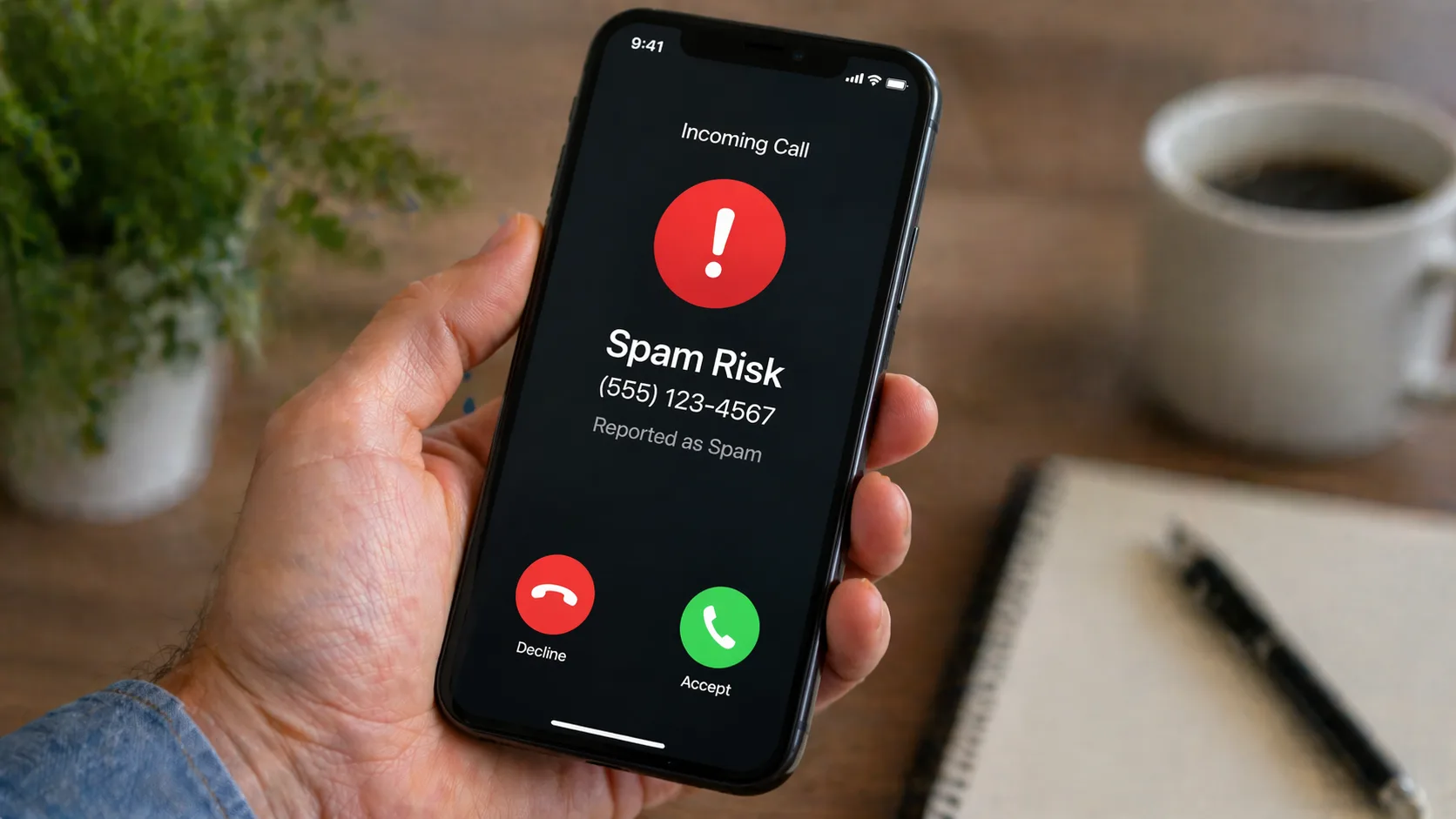
Your phone buzzes with an unfamiliar number. Should you answer? That split-second decision could mean the difference between catching an important call and falling victim to a sophisticated scam. Americans received over 55 billion robocalls in 2024 alone—that’s roughly 168 calls per person annually.
Reverse phone lookup gives you the power to unmask these mystery callers before you pick up. Instead of playing guessing games, you can identify exactly who’s calling and decide whether they deserve your time.
What Is Reverse Phone Lookup?
Think of reverse phone lookup as caller ID on steroids. While traditional caller ID shows you a name (when available), reverse lookup digs deeper. You enter a phone number, and the service searches through millions of records to reveal:
- The caller’s full name and location
- Whether the number is flagged for spam or scams
- How many people reported this number
- The type of line (mobile, landline, VoIP)
- Associated business names
- User reviews and complaint history
These services pull data from public records, user reports, telecommunications databases, and proprietary spam detection algorithms. The best ones update their databases in real-time as new scam patterns emerge.
Why Traditional Caller ID Fails Against Spam Calls
Here’s the problem: scammers know how to beat basic caller ID. They use number spoofing to make their calls appear legitimate—sometimes matching your area code or displaying fake business names.
I’ve seen spoofed calls show up as “IRS” or “Local Police Department” when they’re actually coming from overseas call centers. Your phone’s built-in caller ID can’t detect this manipulation. It simply displays whatever information the caller provides.
Reverse phone lookup services cross-reference multiple data sources. When a number gets reported by dozens or hundreds of people as spam, that pattern shows up immediately—regardless of what name the scammer tries to display.
Step-by-Step: Using Reverse Lookup to Identify Spam Calls
Step 1: Capture the Number
Don’t answer unknown calls immediately. Let them go to voicemail. Legitimate callers leave messages; spammers rarely do. Check your recent calls list and copy the full number, including the area code.
Info: Write down the exact time of the call. If you end up reporting a scammer, this timestamp helps investigators track patterns and link related fraud attempts.
Step 2: Choose Your Reverse Lookup Tool
Not all reverse lookup services offer the same spam detection capabilities. Here’s what separates the effective ones from the mediocre:
| Feature | Free Services | Premium Services |
|---|---|---|
| Basic caller ID | Yes | Yes |
| Spam reports database | Limited | Comprehensive |
| Real-time updates | No | Yes |
| Scam pattern analysis | No | Yes |
| Number of lookups | 1-3/day | Unlimited |
| Accuracy rate | 60-70% | 85-95% |
| Report details | Basic | Detailed |
Free services work fine for occasional checks. If you’re getting multiple spam calls daily, a premium service pays for itself in saved time and reduced stress.
Step 3: Search the Number
Enter the complete phone number into your chosen reverse lookup service. Include the area code but skip any special characters—just the ten digits. Most services return results within 3-5 seconds.
Pay attention to these red flags in the results:
- High report volume: More than 10 spam reports is suspicious; over 50 is definite spam
- Recent activity spike: Scammers often use numbers in short bursts before abandoning them
- Caller ID mismatch: The service shows a different name than what appeared on your phone
- VoIP designation: Many spammers use internet-based phone services to hide their true location
- Foreign origin: Calls displaying local numbers but traced to overseas locations
Step 4: Read User Reports Carefully
The comment section tells you what you’re dealing with. Real people describe their experiences:
“Called 6 times today claiming I owe back taxes. Threatened arrest.”
“Robocall about car warranty expiring. I don’t own a car.”
“Silence for 5 seconds, then foreign accent asking for my social security number.”
These firsthand accounts reveal the scammer’s tactics. You’ll often find exact scripts they use, making it easier to recognize similar scams from different numbers.
Step 5: Take Appropriate Action
If it’s spam: Block the number immediately. Most smartphones let you block numbers directly from your call log. This stops repeat calls from the same source.
If it’s a scam: Report it to the FTC at ReportFraud.ftc.gov and the FCC at consumercomplaints.fcc.gov. These agencies track scam patterns and shut down operations.
If it’s legitimate: Return the call if needed. Sometimes doctors’ offices, delivery services, or appointment reminders come from unfamiliar numbers.
Common Spam Call Types and How to Spot Them
Robocalls
These automated calls play pre-recorded messages. You’ll notice a slight delay after you answer, followed by a generic recording. Reverse lookup shows these numbers get hundreds of reports within days of activation.
Neighbor Spoofing
Scammers use numbers matching your area code and prefix to trick you into answering. The psychology is simple: you’re more likely to pick up a “local” call. Reverse lookup reveals these numbers belong to people who’ve never called you—or don’t even exist.
IRS/Government Impersonators
Government agencies don’t call to threaten arrest or demand immediate payment. These calls create panic to bypass your critical thinking. When you check the number, you’ll find it’s a VoIP line registered to a random person, not a government office.
Tech Support Scams
Claiming to be from Microsoft, Apple, or your internet provider, these callers insist your computer has a virus. Reverse lookup shows the number has zero connection to any legitimate tech company.
Prize and Lottery Scams
“You’ve won!” calls always ask for payment to claim your prize—which doesn’t exist. The numbers typically show up as unregistered VoIP lines with dozens of fraud reports.
Advanced Features in Modern Reverse Lookup Services
The spam detection game keeps evolving. Premium reverse lookup services now offer:
Real-time call screening: Some integrate with your smartphone to identify spam as calls come in, before you even see them.
Predictive blocking: Machine learning algorithms identify number patterns associated with spam campaigns and block entire ranges proactively.
Community-powered databases: Millions of users contribute reports, creating a massive early warning system. When a new scam number activates, it gets flagged within hours.
Historical data: See when a number first appeared, how its usage pattern changed, and whether it’s part of a larger fraud ring.
Business verification: Legitimate companies get verified badges, making it easy to distinguish real callback numbers from impersonators.
Building Your Personal Spam Defense Strategy
Reverse lookup is your primary weapon, but combine it with these tactics:
Never answer unknown numbers directly. If it’s important, they’ll leave a voicemail. This simple habit eliminates 90% of spam interactions.
Enable your carrier’s spam filtering. Major carriers offer free spam identification services. AT&T Call Protect, T-Mobile Scam Shield, and Verizon Call Filter mark suspected spam automatically.
Register with the National Do Not Call Registry. Visit donotcall.gov to add your number. While this won’t stop illegal scammers, it reduces legitimate telemarketing calls.
Document persistent harassers. If the same number calls repeatedly despite blocking, save screenshots of your reverse lookup results and call logs. This documentation helps when filing complaints.
Update your defense regularly. Scammers constantly develop new tactics. Check reverse lookup services every few months to see if previously unknown numbers now have spam reports.
What to Do When Reverse Lookup Returns No Results
Sometimes a number is too new to have reports, or it’s a legitimate caller who rarely uses that line. Here’s what to do:
- Search the number on Google with quotation marks: “555-123-4567”. This finds any web mentions, including business websites or scam warnings.
- Check social media. Paste the number into Facebook or LinkedIn search. Some businesses list their contact numbers publicly.
- Wait 24 hours and search again. If it’s spam, reports usually appear within a day as the scammer blasts thousands of calls.
- Call back using *67 to block your number. Listen to how they answer. Legitimate businesses identify themselves clearly; scammers often use vague greetings.
Info: Never share personal information when calling back an unknown number. If they claim to be your bank or a government agency, hang up and call the official number from their website instead.
The Cost of Ignoring Spam Calls
Many people figure spam calls are just annoying. The reality is more serious. The FTC reports Americans lost $8.8 billion to phone scams in 2023—a 30% increase from the previous year.
Beyond financial loss, spam calls waste time. The average person spends 25 minutes per month dealing with spam calls—that’s 5 hours per year. Multiply that by your hourly wage and you’ll see the hidden cost.
Then there’s the stress factor. Constant unknown calls create anxiety. You can’t tell if you’re missing important calls from doctors, schools, or employers. Reverse phone lookup removes that uncertainty.
Privacy Considerations When Using Reverse Lookup
Before you search every unknown number, understand what happens to your data. Reputable reverse lookup services:
- Don’t sell your search history to third parties
- Encrypt your searches
- Don’t require account creation for basic searches
- Clearly state their data retention policies
Read the privacy policy before using any service. Avoid ones that require excessive personal information just to look up a number. You shouldn’t need to provide your full name, address, and email to identify a spam caller.
Some services operate on a reciprocal model—they list your number in exchange for free searches. Check their opt-out procedures if this concerns you.
How Scammers Adapt and How Reverse Lookup Keeps Up
Scammers abandoned the same tactics they used five years ago. They now:
- Rotate through hundreds of numbers daily
- Use AI-generated voices that sound incredibly human
- Spoof caller ID with names of real local businesses
- Time calls based on when you’re most likely to answer
- Research targets through social media before calling
Reverse lookup services counter these tactics through:
Faster database updates: Reports appear in real-time instead of days later
Pattern recognition: Algorithms identify suspicious calling patterns even from new numbers
Crowd-sourced intelligence: The more people use these services, the faster spam numbers get identified
Carrier partnerships: Direct feeds from phone companies provide instant spam alerts
Making Reverse Lookup Part of Your Daily Routine
You don’t need to search every single unknown number. Focus on these situations:
- Numbers that call multiple times in one day
- Calls received outside normal business hours
- Numbers with area codes far from your location
- Calls that ring once and hang up (often scammers testing active numbers)
- Any number that leaves a vague or threatening voicemail
Set a routine: once per week, review your blocked numbers and search any that called repeatedly. This helps you catch persistent scammers using different numbers.
Keep a simple spreadsheet or note on your phone listing suspicious numbers and what reverse lookup revealed. This personal database helps you spot patterns—like all scam calls coming from the same city or using similar spoofing techniques.
Teaching Others to Protect Themselves
Elderly family members are prime targets for phone scams. They grew up in an era when answering the phone was polite and most callers were legitimate. Share these simplified instructions:
- Don’t answer numbers you don’t recognize
- Never give personal information to someone who called you
- Hang up on anyone demanding immediate payment
- Check suspicious numbers using reverse lookup before calling back
- Ask a family member if unsure about any call
Offer to help them set up call blocking and spam filtering on their phones. Show them how to use reverse lookup step-by-step. A 10-minute tutorial could save them thousands of dollars and considerable stress.
How accurate is reverse phone lookup for identifying spam calls?
Premium reverse phone lookup services achieve 85-95% accuracy for spam identification. Accuracy depends on database size, update frequency, and user reporting volume. Services with millions of active users identify new spam numbers within hours. Free services typically reach 60-70% accuracy because their databases update less frequently and contain fewer user reports.
Can scammers tell if I’ve looked up their number using reverse lookup?
No. Reverse phone lookup searches are completely private. Scammers receive no notification when you check their number. These services don’t contact the number you’re searching or alert the caller in any way. Your searches remain anonymous, which is why reverse lookup is safer than calling back suspicious numbers to investigate.
How often should I check numbers that keep calling me?
Search immediately when a number calls repeatedly (3+ times in one day) or leaves a threatening voicemail. For occasional unknown calls, wait until the same number calls twice before searching—this saves time on random wrong numbers. If you block a number but calls continue from similar numbers (same area code, sequential digits), search those immediately as it indicates a spam campaign.
What’s the difference between spam calls and robocalls?
Robocalls are automated calls that play pre-recorded messages—they can be legal (appointment reminders, school closures) or illegal (scams, fraudulent offers). Spam calls are any unwanted calls, including both robocalls and live-person calls from telemarketers or scammers. All robocalls selling products or services without your consent are spam, but not all spam calls are robocalls. Reverse lookup identifies both types.
Will blocking spam numbers stop all unwanted calls?
Blocking stops that specific number from calling you again, but scammers often use multiple numbers or rotate through new ones daily. This is why reverse lookup is more effective than blocking alone—it helps you identify spam patterns so you never answer in the first place. Combine blocking with your carrier’s spam filter and reverse lookup for the strongest defense. Think of blocking as treating symptoms while reverse lookup prevents the problem.
The phone in your pocket should connect you with people who matter, not con artists hunting for victims. Reverse phone lookup puts you back in control. You decide which calls deserve your attention and which get sent straight to the digital void where they belong.
Take five minutes right now to search those mystery numbers sitting in your call log. You’ll probably discover half of them are spam operations that have scammed thousands of others. Block them, report them, and reclaim your peace of mind. Your future self will thank you the next time your phone rings with an unknown number and you actually know who’s calling.
Editorial Standards & Fact Checking
At NumLocate, our telecommunications and privacy guides are independently researched, cross-referenced with official FCC guidelines and carrier numbering plans, and reviewed to ensure consumer safety and accuracy.

Written by Razib Mojumder
Telecommunications & Digital Privacy Specialist
Razib is the lead researcher at NumLocate, specializing in caller ID authentication protocols, STIR/SHAKEN anti-spoofing frameworks, and practical digital privacy tools for everyday consumers.
Related Articles
 How To
How to Fix Your Phone Number Being Marked as Spam
TL;DR If your phone number is marked as spam, you can fix it by requesting removal from major spam databases like the First Orion Scam Call Registry and registering with the National Do Not Call Registry, contacting your carrier to clear your number’s reputation, reducing your call volume and improving call patterns to avoid spam […]
 How To
How to Remove Your Phone Number From Google Search
TL;DR To remove your phone number from Google search results, start by deleting the source content where your number appears, then submit removal requests through Google’s Removals Tool for specific URLs. You can also contact website owners directly to remove your information, request de-indexing for sensitive personal data, and adjust privacy settings on social media […]
 How To
How to Report Scam Calls and Robocalls
TL;DR Report scam calls to the Federal Trade Commission through their online complaint form or by phone at 1-877-382-4357, and forward robocalls to 7726 (SPAM) to help your carrier identify and block fraudulent numbers. You should also report violations to the Federal Communications Commission, your state attorney general, and consider registering your number on the […]