
How Reverse Phone Lookup Assists in Background Checks

By Razib Mojumder
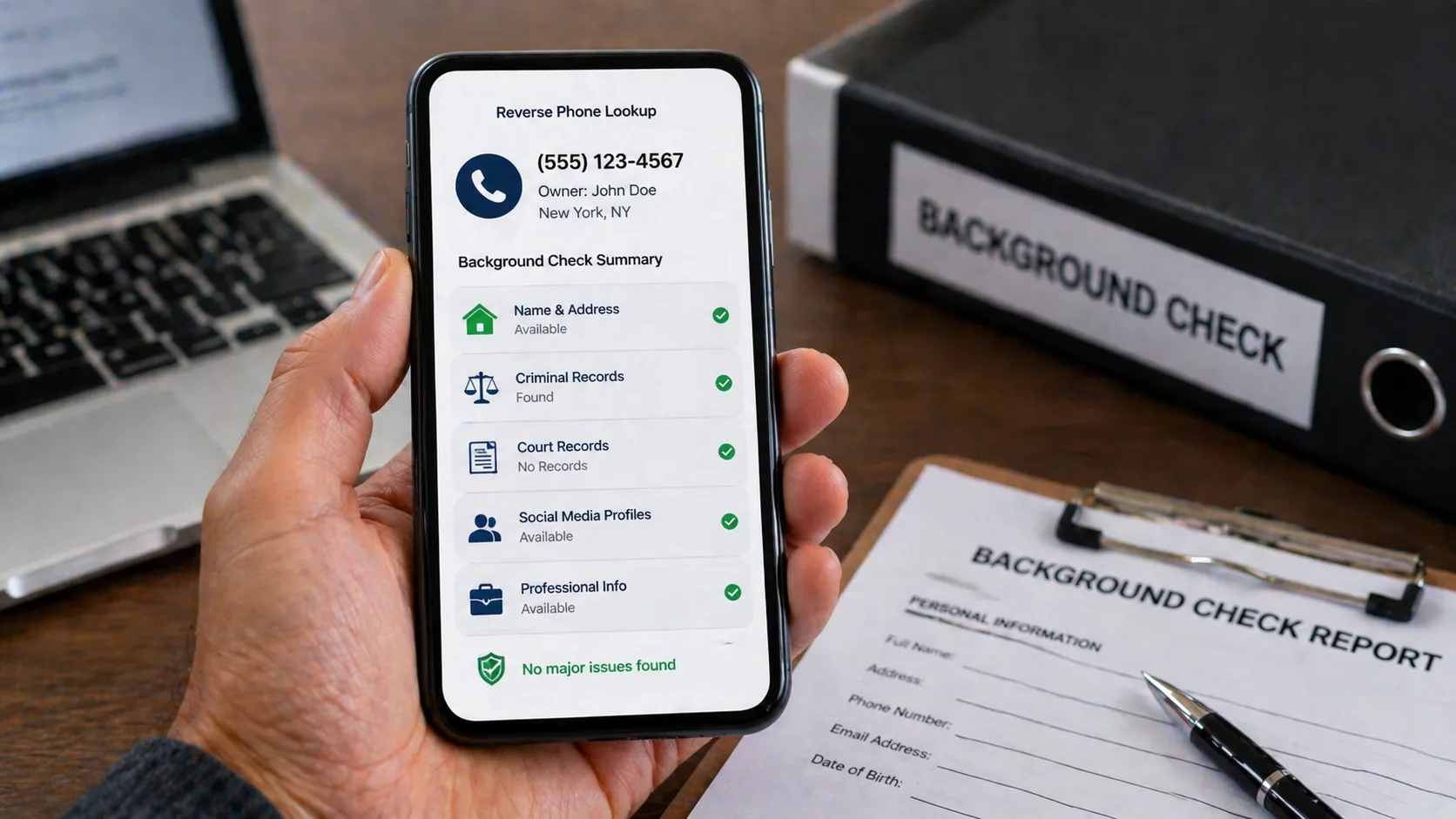
When you receive a call from an unfamiliar number, or when you’re vetting a new employee, tenant, or business partner, a reverse phone lookup can reveal critical information that standard background checks might miss. These tools have evolved from simple directory services into comprehensive information databases that connect phone numbers to detailed owner profiles.
A reverse phone lookup works by searching billions of public records, social media profiles, and telecommunications databases to identify who owns a specific phone number. The process takes seconds, but the information you uncover can save you from costly mistakes or dangerous situations.
What Information Does Reverse Phone Lookup Reveal?
The depth of information varies depending on the service you use, but professional reverse phone lookup tools typically uncover:
Owner Identity Details:
- Full legal name (current and previous)
- Age and date of birth
- Current and past addresses
- Email addresses associated with the number
- Social media profiles linked to the number
Contact History:
- How long the number has been active
- Previous owners of the number
- Associated landline and mobile numbers
- Business affiliations
Background Information:
- Possible criminal records
- Court judgments and liens
- Bankruptcy filings
- Professional licenses
- Property ownership records
Most reverse phone lookup services update their databases monthly, though some premium services offer weekly or even daily updates for the most current information.
How Employers Use Reverse Phone Lookup During Hiring
HR departments have started incorporating reverse phone lookup as part of their screening process. Here’s why it matters:
A resume might list a phone number, but verifying that number’s legitimacy helps confirm the applicant’s identity. If the phone number belongs to someone else, shows up on scam databases, or has been flagged for suspicious activity, that’s a red flag worth investigating.
Companies routinely discover:
- Applicants using fake references with burner phones
- Phone numbers associated with multiple identities
- Numbers flagged for fraudulent activity
- Discrepancies between stated location and phone number registration
One recruiting manager at a mid-sized tech firm shared that they caught three fraudulent applications last year simply by running the provided phone numbers through a lookup service. Each number was associated with someone other than the applicant.
Landlords and Tenant Screening
Property managers face unique challenges when screening potential tenants. Credit reports and employment verification are standard, but reverse phone lookup adds another verification layer.
Red Flags Landlords Watch For:
- Phone numbers registered to different names than the applicant
- Recently activated numbers (suggesting possible fraud)
- Numbers associated with eviction records
- Contact information linked to multiple rental applications across different cities
- Phone numbers flagged in scam databases
A property management company in Florida reported preventing five potentially problematic tenancies in 2024 by identifying application fraud through phone number verification. In each case, the phone numbers were either recently purchased or associated with individuals who had eviction histories.
Comparing Reverse Phone Lookup Services for Background Checks
| Feature | Basic Services | Premium Services | Enterprise Solutions |
|---|---|---|---|
| Database Size | 100M-500M records | 1B+ records | 2B+ records |
| Update Frequency | Quarterly | Monthly | Weekly/Daily |
| Criminal Records | Limited | Comprehensive | Full Court Access |
| Social Media Links | Basic | Extensive | API Integration |
| Batch Searches | No | Limited (50-100) | Unlimited |
| Average Cost | Free-$9.99 | $19.99-$49.99 | Custom Pricing |
| Report Detail | 1-2 pages | 5-10 pages | 15+ pages |
Integration with Traditional Background Checks
Reverse phone lookup shouldn’t replace traditional background checks—it complements them. Traditional checks pull from official government databases for criminal records, employment history, and credit reports. Phone lookup services fill the gaps by:
Verifying Identity Consistency: If someone’s phone number has been registered to three different names in the past year, that’s worth investigating further. Identity thieves often use multiple phone numbers, and this pattern can reveal fraudulent behavior before it becomes your problem.
Uncovering Hidden Connections: Phone records can reveal associations that don’t show up in standard checks. For instance, a business partner’s phone number might be linked to bankrupt companies or individuals with poor credit histories.
Speed Advantage: While comprehensive background checks can take 3-5 business days, reverse phone lookup delivers results instantly. This speed helps with initial screening, allowing you to filter out problematic candidates before investing in full background reports.
Pros:
- Instant results compared to traditional background checks
- Reveals information not found in standard databases
- Cost-effective screening tool for initial vetting
- Uncovers hidden phone numbers and aliases
- Identifies recently created numbers that may indicate fraud
Cons:
- Information accuracy depends on database quality
- May return outdated data if not regularly updated
- Cannot replace comprehensive criminal background checks
- Legal restrictions vary by state and purpose
- May miss unlisted or very new phone numbers
Legal Considerations When Using Phone Lookup for Background Checks
The Fair Credit Reporting Act (FCRA) regulates how background check information can be used, particularly in employment and housing decisions. Here’s what you need to know:
Permissible Uses:
- Employment screening (with proper consent and disclosure)
- Tenant screening for rental properties
- Business partner verification
- Personal safety verification
- Fraud prevention
Required Compliance: If you’re using reverse phone lookup data for employment or housing decisions, you must:
- Obtain written consent from the individual
- Provide disclosure that you’ll be conducting a background check
- Give the individual a chance to dispute inaccurate information
- Follow adverse action procedures if you deny based on findings
Small business owners sometimes assume these rules only apply to large companies, but FCRA compliance is mandatory regardless of company size. Violations can result in fines ranging from $100 to $1,000 per violation, plus potential lawsuits.
Identifying Phone Number Red Flags
Experienced investigators look for specific patterns when running reverse phone lookups:
Recently Activated Numbers: If someone provides a phone number that was activated within the past 30 days, and they claim to have lived at their current address for years, that mismatch deserves scrutiny. Legitimate users occasionally change numbers, but fraudsters often use fresh numbers to avoid detection.
VoIP and Virtual Numbers: Google Voice, Skype numbers, and similar services aren’t inherently suspicious, but they’re commonly used in scams because they’re cheap and disposable. When someone uses a VoIP number for important transactions like job applications or rental agreements, verify their identity through additional channels.
Number Recycling Issues: Phone carriers recycle disconnected numbers after 90 days. Sometimes reverse lookup results show the previous owner’s information rather than the current user. Cross-reference the data with other information sources to ensure accuracy.
Geographic Inconsistencies: A New York City area code on someone claiming to live in Los Angeles isn’t automatically suspicious—people keep numbers when they move. However, if multiple data points don’t align (address, employment location, references), the phone number discrepancy adds to the concern.
Best Practices for Accurate Results
Getting reliable information from reverse phone lookup requires understanding how to use these tools effectively:
Run Multiple Searches: Don’t rely on a single service. Different databases have different strengths. One service might excel at finding social media connections, while another specializes in court records. Running the same number through 2-3 services provides a more complete picture.
Document Your Findings: Create a standardized form for recording reverse phone lookup results. Include the date of the search, service used, and key findings. This documentation proves valuable if you need to justify hiring or housing decisions later.
Verify Unexpected Results: If you find concerning information, verify it through independent sources before taking action. Database errors happen, and you don’t want to make decisions based on incorrect data.
Consider the Age of Information: Pay attention to when records were last updated. A five-year-old address or a deactivated social media account might not reflect the person’s current situation.
Real-World Applications and Case Studies
Case 1: Small Business Fraud Prevention A small e-commerce company received a large order from a new customer. Before shipping $15,000 in merchandise, they ran the customer’s phone number through a reverse lookup service. The number was registered to a different name and had been flagged in fraud databases. They required alternative payment verification, which the customer couldn’t provide. The order turned out to be fraudulent.
Case 2: Dating Safety A woman met someone through an online dating app. Before their first in-person meeting, she ran his phone number through a lookup service. The results showed the number was associated with multiple online dating profiles using different names and photos. She avoided what could have been a dangerous situation.
Case 3: Employee Reference Verification A hiring manager noticed that two references for a job applicant had phone numbers registered to the same address as the applicant. Further investigation revealed the applicant had created fake references using free VoIP numbers. The discovery saved the company from hiring someone who had fabricated their work history.
Phone Lookup for Investigative Purposes
Professional investigators use reverse phone lookup differently than casual users. They look for patterns across multiple data points:
Network Analysis: Investigators map out connections between phone numbers, identifying clusters of related individuals. If ten phone numbers all connect to the same address, email, or social media profiles, that network becomes visible.
Timeline Construction: By tracking when numbers were activated and deactivated, investigators can construct timelines of a person’s movements and activities. This proves particularly useful in civil litigation or fraud investigations.
Cross-Reference Verification: Every piece of information from a phone lookup gets verified against other sources. Name, address, age, and associates all get checked for consistency across multiple databases.
Info: Professional investigators typically spend 15-20 minutes analyzing phone lookup results rather than just glancing at the report. The details matter more than the headline information.
Limitations and Accuracy Concerns
No reverse phone lookup service has perfect accuracy. Understanding the limitations helps you use these tools effectively:
Database Gaps: Some phone numbers simply won’t return results, particularly:
- Very recently activated numbers (less than 30 days old)
- Numbers from smaller carriers or MVNOs
- International numbers
- Heavily protected privacy-focused numbers
False Positives: Database errors occasionally link phone numbers to the wrong people. This happens more frequently with:
- Recycled phone numbers
- Family members sharing plans
- Business lines with multiple users
Privacy Protection: Some individuals successfully scrub their information from data broker databases. While this doesn’t mean they’re hiding something nefarious, it does mean reverse lookup might return limited results.
Mobile vs. Landline Lookup Differences
The type of phone number affects what information you’ll find:
Mobile Numbers:
- Often harder to trace initially
- More frequently changed
- Better social media connections
- More likely to be associated with multiple carriers
- Higher chance of being prepaid/disposable
Landline Numbers:
- Historically more stable ownership
- Easier to connect to physical addresses
- More reliable for long-term history
- Often business-related
- Declining in overall usage
The shift toward mobile-only households means landline databases are becoming less relevant. As of 2024, roughly 70% of American households use only mobile phones, making mobile number lookup increasingly important for background checks.
Privacy Laws Affecting Reverse Phone Lookup
State laws create a patchwork of regulations affecting how you can use phone lookup data:
California (CCPA/CPRA): The strictest data privacy laws in the U.S. require clear opt-out mechanisms and limit data collection. Some reverse lookup services restrict results for California residents.
Vermont: Requires data brokers to register with the state. Vermont residents can request their data be removed from broker databases, potentially limiting lookup results.
Illinois (BIPA): While focused on biometric data, Illinois has broader privacy protections that affect how personal information can be collected and used.
European GDPR: If you’re looking up numbers associated with EU residents, GDPR severely limits available information. Most reverse lookup services return minimal data for European numbers.
Combining Tools for Comprehensive Screening
The most thorough background checks combine multiple resources:
Layer 1: Reverse Phone Lookup Quick initial screening to verify basic identity and catch obvious red flags. Takes 2-5 minutes.
Layer 2: Social Media Investigation Manual review of profiles linked through the phone lookup. Provides context about the person’s activities and associations. Takes 10-15 minutes.
Layer 3: Traditional Background Check Official criminal records, credit reports, and employment verification through FCRA-compliant services. Takes 3-5 business days.
Layer 4: Reference Verification Phone calls to provided references, now verified as legitimate through reverse lookup. Takes 1-2 hours.
This layered approach catches different types of problems. Phone lookup might reveal a fake identity that wouldn’t show up in criminal records because the person hasn’t been caught yet.
Industry-Specific Applications
Healthcare: Medical practices verify patient identity and contact information before scheduling procedures. Phone lookup helps confirm insurance information matches the patient’s stated identity.
Financial Services: Banks and lenders use phone verification as part of their Know Your Customer (KYC) requirements. Synthetic identity fraud—where criminals create fake identities using real and fake information—often reveals itself through phone number analysis.
Real Estate: Beyond tenant screening, real estate agents verify buyer and seller identities before showing properties or entering contracts. This protects against wire fraud schemes where imposters pose as legitimate buyers.
Legal Services: Attorneys locate witnesses, verify client information, and conduct due diligence on opposing parties. Phone lookup provides initial leads that legal investigators can pursue further.
How accurate is reverse phone lookup for background checks?
Accuracy varies by service and phone number type, but reputable services typically maintain 85-95% accuracy for active mobile numbers and 90-98% for landlines. Accuracy depends on database freshness, with the best services updating monthly. Numbers activated within the past 30 days or those using strong privacy protections may return limited or no results. Always verify critical information through multiple sources rather than relying on a single lookup.
Can reverse phone lookup replace traditional background checks for employment?
No, reverse phone lookup should complement, not replace, traditional background checks. While phone lookup provides valuable verification and can catch identity fraud, it doesn’t access the official criminal databases, credit bureaus, and employment verification systems required for FCRA-compliant background checks. Think of phone lookup as a first-line screening tool that helps you identify which candidates warrant deeper investigation.
Is it legal to use reverse phone lookup for tenant screening?
Yes, using reverse phone lookup for tenant screening is legal, but you must comply with Fair Housing Act requirements and obtain proper consent. You cannot discriminate based on protected classes, and if you deny housing based on information found through phone lookup, you must follow adverse action procedures—providing the applicant with the findings and an opportunity to dispute inaccurate information. Some states have additional requirements, so check your local laws.
What should I do if reverse phone lookup returns information about the wrong person?
This happens most commonly with recently recycled phone numbers. Cross-reference the lookup results with other known information about the person (address, age, email, social media). If there’s a clear mismatch, the results likely reflect a previous owner. Try multiple lookup services, as some update their databases more frequently. If you’re making important decisions based on the data, always verify through independent sources and give the individual a chance to explain discrepancies.
How far back does reverse phone lookup show phone number history?
Most services maintain records going back 5-10 years for active numbers, though this varies significantly by provider. Premium services often have deeper historical data, sometimes extending 15+ years. However, the usefulness of older data diminishes over time—a phone number’s owner from eight years ago rarely provides relevant information for current background checks. Focus on the most recent 2-3 years of history for the most actionable insights.
Warning Signs in Lookup Results
Certain patterns in reverse phone lookup results should trigger additional scrutiny:
Multiple Names Associated: If a single number shows connections to four or five different names, that could indicate the number belongs to a business, a family plan, or potentially identity fraud.
Mismatched Geographic Data: When the phone’s area code, billing address, and stated residence are all in different states with no clear explanation, investigate further.
No Digital Footprint: In 2024, most people have some online presence. A phone number with zero social media connections, no linked email addresses, and no web mentions for someone under 60 is unusual.
Frequent Number Changes: If someone has changed their primary phone number three or four times in the past year, that pattern might indicate they’re avoiding creditors, law enforcement, or other obligations.
Burner Phone Indicators: Prepaid phones from discount carriers aren’t inherently suspicious, but when combined with other red flags (new activation, no online presence, mismatched identity information), they warrant careful review.
The key isn’t treating any single indicator as proof of wrongdoing—it’s recognizing patterns that don’t align with the person’s stated situation. Someone with a legitimate explanation can usually clarify these discrepancies quickly.
Reverse phone lookup has transformed from a simple directory service into a powerful background verification tool. When used properly—combined with traditional checks, verified through multiple sources, and applied within legal boundaries—it provides crucial insights that help you make informed decisions about who you hire, rent to, or do business with. The phone number someone provides tells a story, and learning to read that story accurately gives you an edge in an increasingly complex world.
Editorial Standards & Fact Checking
At NumLocate, our telecommunications and privacy guides are independently researched, cross-referenced with official FCC guidelines and carrier numbering plans, and reviewed to ensure consumer safety and accuracy.

Written by Razib Mojumder
Telecommunications & Digital Privacy Specialist
Razib is the lead researcher at NumLocate, specializing in caller ID authentication protocols, STIR/SHAKEN anti-spoofing frameworks, and practical digital privacy tools for everyday consumers.
Related Articles
 How To
How to Fix Your Phone Number Being Marked as Spam
TL;DR If your phone number is marked as spam, you can fix it by requesting removal from major spam databases like the First Orion Scam Call Registry and registering with the National Do Not Call Registry, contacting your carrier to clear your number’s reputation, reducing your call volume and improving call patterns to avoid spam […]
 How To
How to Remove Your Phone Number From Google Search
TL;DR To remove your phone number from Google search results, start by deleting the source content where your number appears, then submit removal requests through Google’s Removals Tool for specific URLs. You can also contact website owners directly to remove your information, request de-indexing for sensitive personal data, and adjust privacy settings on social media […]
 How To
How to Report Scam Calls and Robocalls
TL;DR Report scam calls to the Federal Trade Commission through their online complaint form or by phone at 1-877-382-4357, and forward robocalls to 7726 (SPAM) to help your carrier identify and block fraudulent numbers. You should also report violations to the Federal Communications Commission, your state attorney general, and consider registering your number on the […]