
How to Perform a Free Reverse Phone Lookup: A Step-by-Step Guide

By Razib Mojumder
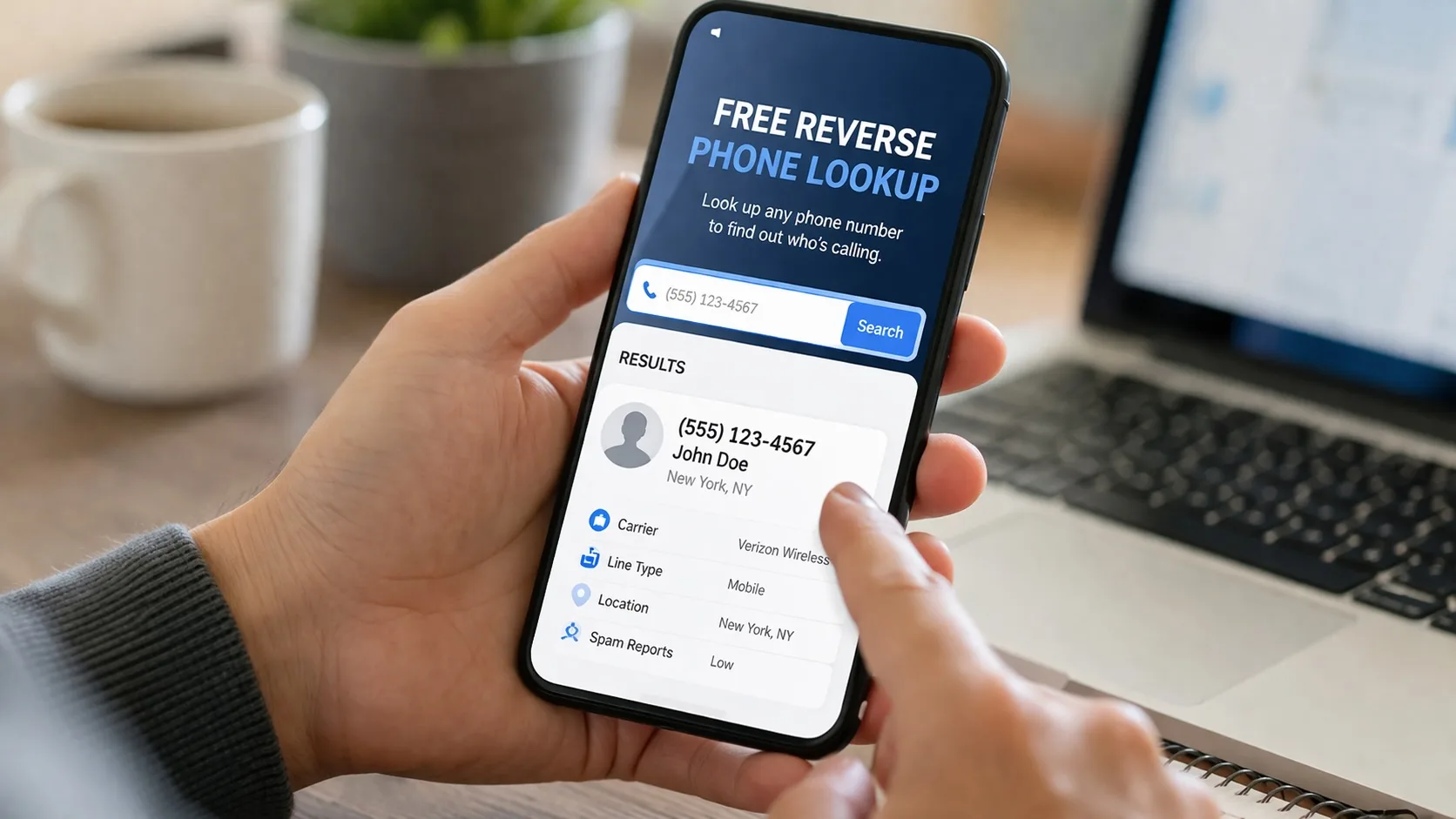
Getting calls from unknown numbers is frustrating. You want to know who’s calling before you answer, but you don’t want to pay for the information. The good news? You have several legitimate ways to identify mystery callers without opening your wallet.
I’ve tested dozens of methods over the years, and I’m sharing the ones that actually work. Some take more effort than others, but all of them are completely free.
Understanding What Reverse Phone Lookup Actually Does
A reverse phone lookup works backwards from a traditional phone directory. Instead of searching by name to find a number, you enter a phone number to discover who owns it. The service searches through public records, social media profiles, business listings, and other databases to match the number with its owner.
The catch? Free services have limitations. They typically access public information only, so you won’t get the same depth as paid services. But for most situations—screening spam calls, identifying missed calls, or verifying a business number—free methods work perfectly fine.
Method 1: Start With Your Phone’s Built-In Features
Your smartphone already has basic caller identification built in. Here’s what to check first:
iPhone Users
Open your Phone app and tap the ‘i’ icon next to the unknown number in your recent calls. If the number appears in your contacts, emails, or messages, your iPhone will show you the match. iOS also flags suspected spam calls automatically.
Go to Settings > Phone > Silence Unknown Callers to block calls from numbers not in your contacts. This won’t identify them, but it stops the interruption.
Android Users
Android phones use Google’s spam detection. When an unknown number calls, you’ll often see a label like “Suspected spam caller” or the business name if it’s registered with Google.
Open your Phone app, tap the number, and select “Search” or “Report spam.” Google will show you if other users have reported this number.
Method 2: Use Search Engines Strategically
This sounds obvious, but most people do it wrong. Simply typing a phone number into Google works sometimes, but you’ll get better results with these techniques:
Google Search Tips
Put the phone number in quotes: “(555) 123-4567”
This tells Google to search for that exact sequence. Try different formats:
- With parentheses and hyphens: (555) 123-4567
- Without formatting: 5551234567
- With country code: +1 555 123 4567
Add context terms like “scam,” “telemarketer,” or “who called” to find complaint forums and reports.
What Google Results Reveal
You’ll often find the number listed on:
- Business websites and directories
- Social media profiles (especially Facebook and LinkedIn)
- Complaint boards where people report spam
- Classified ads or marketplace listings
If the number belongs to a business, you’ll usually find it within the first few results. Personal numbers are trickier, but you might find them mentioned in public records or social media posts.
Method 3: Tap Into Social Media Platforms
Facebook Phone Number Search
Facebook’s search function is surprisingly powerful. Log into your account and use the search bar at the top. Enter the phone number exactly as it appears.
If someone has their number linked to their profile—even if it’s hidden from public view—Facebook might suggest their account in the results. This works because Facebook uses phone numbers for account verification and friend suggestions.
LinkedIn for Business Numbers
LinkedIn excels at identifying professional contacts. Search the number in LinkedIn’s search bar. Business owners and salespeople often list their direct lines on their profiles.
Method 4: Check Free Reverse Phone Lookup Services
Several websites offer basic reverse phone lookups at no cost. They vary in quality and coverage, so I’ll explain what each type actually provides.
White Pages Directories
Traditional online white pages compile information from public records and phone directories. You can search by phone number and see:
- Owner’s name (sometimes partial, like “J. Smith”)
- General location (city and state)
- Phone carrier information
- Whether it’s a landline or mobile
These services work best for landlines and established business numbers. Mobile numbers are harder to trace through these databases.
Caller ID Apps and Websites
Community-based caller ID platforms rely on user reports. When someone receives a call, they can mark it as spam, report the caller type, and add notes. Future searches show this crowdsourced information.
| Service Type | Best For | Information Provided | Limitations |
|---|---|---|---|
| White Pages | Landlines, businesses | Name, location, carrier | Limited mobile coverage |
| Caller ID Apps | Spam identification | Caller type, user reports | Requires many users to be effective |
| Search Engines | Public listings | Varies widely | Time-consuming |
| Social Media | Personal connections | Profile information | Privacy settings may hide info |
Info: Free services typically show partial information (like “John S. from California”) and offer full details only with a paid upgrade. This is how they stay in business while offering free basic searches.
Method 5: Use Government and Public Record Databases
Public records contain a wealth of information, and they’re completely free to search.
Property Records
If you have a local number, check your county’s property records website. Property owners often list contact numbers on official documents. Search by address if you have one, or browse recent transactions.
Business Registries
Every state maintains a business entity database. If the number belongs to a registered business, you’ll find:
- Official business name
- Owner/agent names
- Business address
- Registration date
Search for “[your state] business entity search” to find your state’s database.
How to Identify Spam and Scam Calls
Some patterns immediately signal a scam or spam call:
Cons:
- The number has been reported hundreds of times on complaint sites
- It’s a robocall offering something too good to be true
- The caller asks for personal information or payment
- The number spoofs a local area code but isn’t actually local
- You find no legitimate business or person associated with it :::
Pros:
- The number appears on a verified business website
- Multiple sources confirm the same owner
- It has a professional voicemail greeting
- You can find the business on Google Maps or social media
- The number matches official contact information :::
What to Do When Free Lookups Come Up Empty
Sometimes you won’t find anything. This happens when:
The number is new. Newly activated numbers haven’t made it into most databases yet. Wait a few weeks and search again.
It’s a VOIP or internet phone number. These aren’t tied to physical locations and are harder to trace. Look for the service provider in the number’s prefix.
The owner protects their privacy. Some people actively remove their information from public databases through opt-out requests.
It’s a burner phone. Prepaid phones purchased with cash are nearly impossible to trace to a specific person.
In these cases, your best bet is ignoring the call unless they leave a voicemail. Legitimate callers will identify themselves and explain why they’re calling.
Protecting Your Own Number From Reverse Lookups
If you’re concerned about your own privacy, you can make it harder for people to find you:
- Opt out of data broker sites. Visit major people search sites and submit opt-out requests. This takes time but reduces your digital footprint.
- Adjust social media privacy settings. Make sure your phone number isn’t visible to the public on Facebook, Instagram, or LinkedIn.
- Use a secondary number for online accounts. Get a Google Voice number or similar service for shopping, dating apps, and other non-essential uses.
- Register with the National Do Not Call Registry. While this won’t hide your number, it reduces telemarketing calls.
Red Flags That Mean You Should Stop Digging
Be careful not to cross legal or ethical boundaries:
- Don’t use paid search tools that violate privacy laws
- Avoid “hacking” methods or unauthorized database access
- Don’t harass the number’s owner once you identify them
- Respect when someone has clearly opted out of public listings
Reverse phone lookup is legal for legitimate purposes like screening calls or verifying contacts. Using it to stalk, harass, or commit fraud is illegal and can result in serious consequences.
Tips for Better Results
After running thousands of searches, here’s what improves your success rate:
Search multiple sources. What one site misses, another might find. Check at least three different methods before giving up.
Try different number formats. Some databases index numbers with dashes, others without. Test various formats to cover all bases.
Search at different times. Databases update regularly. A number that returns nothing today might have information next week.
Look for patterns. If you get multiple calls from similar numbers (like 555-123-0001, 555-123-0002, etc.), they’re likely from the same source using a number pool.
Check recent activity. Search for the number plus “2024” or “2025” to find recent reports and complaints.
When Mobile Numbers Are Harder to Trace
Landlines are easy—they’re tied to physical addresses and appear in traditional directories. Mobile numbers are a different story.
Cellular carriers don’t publish customer information publicly. Mobile numbers also change hands frequently. Someone might have recycled a number that previously belonged to the person you’re trying to find.
Your best bets for mobile numbers are:
- Social media searches (especially Facebook)
- Caller ID apps with large user bases
- Google searches that might catch the number in public posts or listings
Expect lower success rates with mobile numbers unless they belong to a business owner who uses their personal cell for work.
Are free reverse phone lookups really accurate?
Free services pull from public databases, so accuracy depends on how current that information is. Business numbers and landlines are usually accurate. Mobile numbers are hit-or-miss because carriers don’t publish customer data. Cross-reference multiple sources to verify information before trusting it completely.
Can I find out who called me from a private or blocked number?
No legitimate free service can identify truly blocked or private calls. When someone blocks their caller ID, that information isn’t transmitted to your phone or any database. Apps claiming to reveal blocked callers are either scams or only work in specific circumstances, like if you previously saved that contact.
Why do some free services ask for my phone number to see results?
This is a marketing tactic. They want to build their database and potentially sell you additional services. Some legitimate sites do this to prevent automated scraping, but many use it to upsell paid reports. You can usually find the same information elsewhere without providing your number.
How often should I search a number that comes back with no results?
Wait at least 2-3 weeks between searches. Databases don’t update daily, and searching repeatedly in a short time won’t help. If a number is genuinely unlisted or new, it might take a month or more before information appears in public databases.
Is it legal to look up someone’s phone number without their permission?
Yes, searching publicly available information is legal. Reverse phone lookup services only access data that’s already public record or voluntarily shared. What matters is what you do with that information—using it for harassment, stalking, or illegal purposes is a crime. Stick to legitimate reasons like screening calls or verifying business contacts.
Making the Most of Limited Information
Even partial results give you useful clues. A city and state tell you if it’s local or long-distance. A carrier name helps identify VOIP versus traditional lines. A “likely spam” label means you can safely ignore it.
Combine whatever details you find with context. Did you recently apply for jobs? It might be a recruiter. Shopping online lately? Could be a delivery notification. Expecting no calls? Probably spam.
The goal isn’t always to get a full name and address. Sometimes you just need enough information to decide whether the call deserves your attention. Free reverse phone lookup tools give you exactly that—enough context to make an informed choice without spending money on information you might not actually need.
Editorial Standards & Fact Checking
At NumLocate, our telecommunications and privacy guides are independently researched, cross-referenced with official FCC guidelines and carrier numbering plans, and reviewed to ensure consumer safety and accuracy.

Written by Razib Mojumder
Telecommunications & Digital Privacy Specialist
Razib is the lead researcher at NumLocate, specializing in caller ID authentication protocols, STIR/SHAKEN anti-spoofing frameworks, and practical digital privacy tools for everyday consumers.
Related Articles
 How To
How to Fix Your Phone Number Being Marked as Spam
TL;DR If your phone number is marked as spam, you can fix it by requesting removal from major spam databases like the First Orion Scam Call Registry and registering with the National Do Not Call Registry, contacting your carrier to clear your number’s reputation, reducing your call volume and improving call patterns to avoid spam […]
 How To
How to Remove Your Phone Number From Google Search
TL;DR To remove your phone number from Google search results, start by deleting the source content where your number appears, then submit removal requests through Google’s Removals Tool for specific URLs. You can also contact website owners directly to remove your information, request de-indexing for sensitive personal data, and adjust privacy settings on social media […]
 How To
How to Report Scam Calls and Robocalls
TL;DR Report scam calls to the Federal Trade Commission through their online complaint form or by phone at 1-877-382-4357, and forward robocalls to 7726 (SPAM) to help your carrier identify and block fraudulent numbers. You should also report violations to the Federal Communications Commission, your state attorney general, and consider registering your number on the […]