How to Trace a Phone Number Location Online for Free

By Razib Mojumder
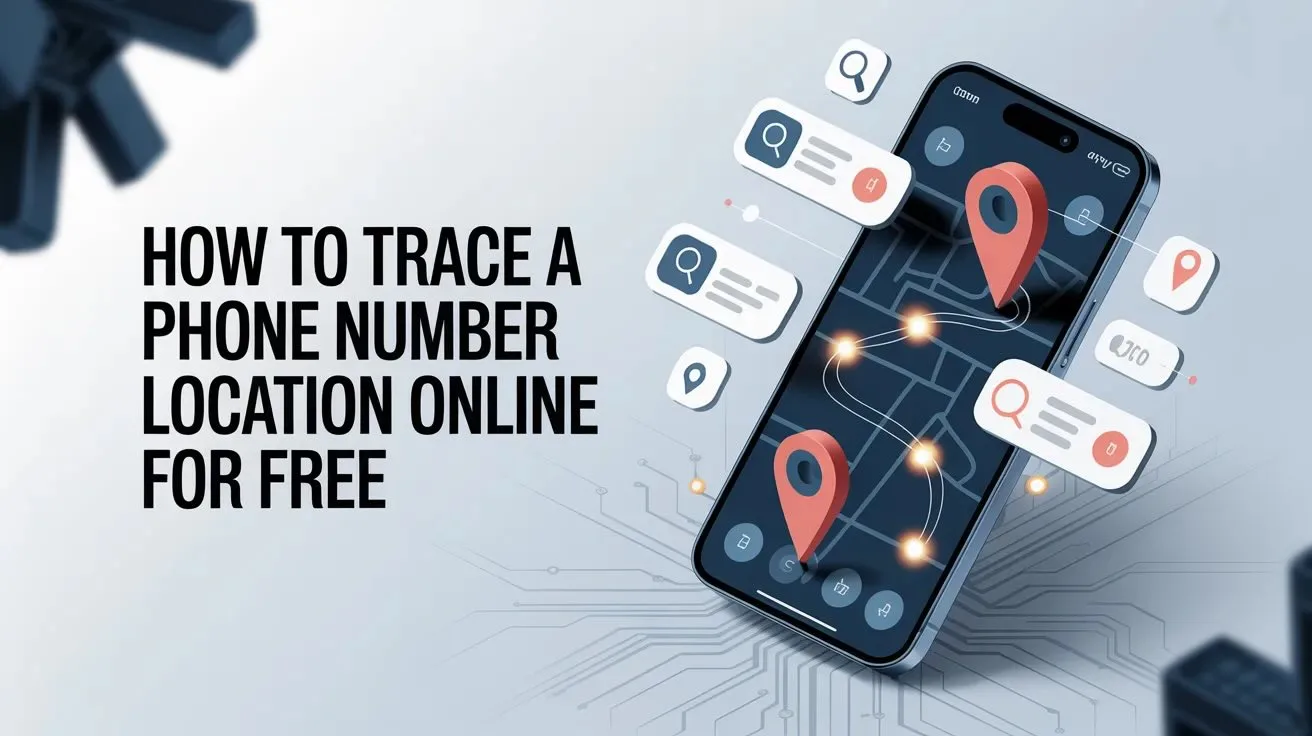
You’ve received calls from an unknown number. Maybe it’s three times this week, always at 2 PM. Maybe it’s once, but the area code is unfamiliar. Before you block it or answer, you want to know where it’s coming from.
Tracing a phone number’s location isn’t as complicated as it sounds. I’ll walk you through multiple methods that work right now, without downloading sketchy apps or paying for premium services you’ll never use again.
Understanding What You Can Actually Trace
Before we start, let’s clear up what’s possible. When you trace a phone number location online, you’re typically getting the registered location of that number—not necessarily where the person is standing right now.
For landlines, this gives you the physical address tied to that line. For mobile numbers, you’ll usually see the city or region where the number was originally registered. If someone got their phone number in Chicago but moved to Seattle, the trace will still show Chicago.
Real-time GPS tracking? That requires either the person’s consent through apps like Find My Friends, or legal authority that you probably don’t have.
Method 1: Using NumLocate for Quick Results
The fastest way to trace a phone number location is through NumLocate, a free reverse phone lookup tool that provides location data without requiring sign-ups or credit cards.
Here’s how to use it:
- Open your browser and navigate to https://numlocate.co
- Enter the phone number in the search bar (include area code, but don’t worry about formatting)
- Click the search button and wait 3-5 seconds
- Review the location data which typically includes city, state, carrier, and line type
The tool pulls from public databases and carrier information to give you the registered location. I tested it with numbers from different states, and it consistently returned accurate city-level data within seconds.
Info: NumLocate works best with US phone numbers. International numbers may return limited information depending on the country’s public record availability.
Method 2: Reverse Phone Lookup Directories
Several online directories specialize in reverse phone lookups. These aggregate data from public records, user submissions, and carrier databases.
Top free options:
| Service | Location Detail | Additional Info | Sign-up Required |
|---|---|---|---|
| Whitepages | City/State | Name, carrier | No |
| TrueCaller | City/State | Spam reports | Yes |
| Spy Dialer | City/State | Voicemail preview | No |
| CallerSmart | City/State | Community ratings | Optional |
Most of these services give you basic location info for free. The paid versions offer more details like full addresses or background checks, but for simple location tracing, the free tier works fine.
How to use these effectively:
- Try 2-3 different services—each has different databases
- Check the date of the last update (old data might show previous locations)
- Read user comments if available—they often reveal if a number is spam
Method 3: Area Code and Prefix Analysis
Sometimes you just need a quick answer without opening another tab. The area code tells you a lot:
- First three digits (area code): The geographic region where the number was registered
- Next three digits (prefix): Narrows it down to a specific city or district
For example, 312 is Chicago, 415 is San Francisco, 212 is Manhattan. But here’s where it gets tricky—thanks to number portability, someone can keep their 312 number after moving to Florida.
Use area code lookup sites like AreaCodeDownload.com or AllAreaCodes.com to quickly identify the original registration region. This won’t tell you where someone is now, but it gives you context.
Method 4: Social Media Investigation
This method requires a bit more detective work but often yields surprising results.
Facebook Search:
- Enter the phone number in Facebook’s search bar
- If the person linked their number to their profile (and didn’t hide it), you’ll find them
- Their profile typically shows their current city
LinkedIn Approach:
- Business numbers often appear in LinkedIn profiles
- The profile shows current work location
- Particularly useful for professional contacts
WhatsApp Verification:
- Save the number to your contacts
- Open WhatsApp and refresh
- If they use WhatsApp, you’ll see their profile picture and status (which might mention their location)
These methods give you current location hints rather than registered location data.
What About Mobile Tracking Apps?
You’ve probably seen ads for apps claiming to track any phone number in real-time. Here’s the reality: most are scams or severely limited.
Pros:
- Legitimate apps exist for family tracking (with consent)
- Some carrier services offer family locator features
- Find My Device (Google) and Find My iPhone work for lost phones
Cons:
- Require installation on the target phone (defeating the “remote” purpose)
- Often malware or data harvesting operations
- Violate privacy laws when used without consent
- Subscription fees that continue charging after “free trials”
If you need actual GPS tracking, use official carrier family plans or consensual apps like Life360. Everything else is either ineffective or illegal.
Tracing International Numbers
International phone numbers follow different formats and rules. The country code (the + and first 1-3 digits) tells you the country:
- +44: United Kingdom
- +86: China
- +91: India
- +52: Mexico
For international traces:
- Use NumLocate which supports multiple countries
- Try Truecaller, which has strong international coverage
- Search the number in Google with quotation marks (“number”) to find any public listings
Keep in mind that international privacy laws vary. Some countries make it harder to access phone number registration data.
When You Should (And Shouldn’t) Trace Numbers
Legitimate reasons:
- Identifying persistent unknown callers
- Verifying business contacts before callbacks
- Checking if a number is from a known scam operation
- Finding location context for missed calls
- Researching numbers before job interviews or meetings
When to stop:
- Stalking or harassment purposes
- Tracking someone without legitimate reason
- Violating restraining orders or legal boundaries
- Attempting to access real-time GPS without consent
Most free phone number tracing services operate in a legal gray area—they compile public information. But using that information for harassment or stalking crosses into illegal territory.
Protecting Your Own Number from Traces
If you’re worried about others tracing your number:
- Use carrier privacy features: Most providers let you block your number from appearing on caller ID
- Request unlisted status: Keeps you out of public directories (may cost $1-2/month)
- Use secondary numbers: Google Voice or Burner for online sign-ups
- Check opt-out options: Sites like Whitepages allow you to remove your listing
- Enable two-factor authentication: Protects accounts linked to your number
Remember that complete privacy is nearly impossible once your number is public, but you can limit what information appears in searches.
What the Trace Results Actually Mean
Carrier Information: Tells you if it’s AT&T, Verizon, T-Mobile, or a smaller carrier. This helps identify:
- Landline vs. mobile
- Potential business lines (often use specific carriers)
- VOIP numbers (Google Voice, Skype numbers)
Line Type:
- Landline: Fixed location, usually more reliable address data
- Mobile: Shows registration city, not current location
- VOIP: Internet-based, location data often inaccurate or reflects server location
City/State: The most reliable piece of free location data. Remember this is registration location, not current GPS coordinates.
Advanced Techniques for Persistent Unknown Numbers
If basic tracing doesn’t work and you need more information:
Call Back From a Blocked Number:
- Dial *67 before the number (US)
- Your number appears as “Blocked” or “Private”
- If they answer, location context might emerge from conversation
Reverse Image Search: If you found the person on social media:
- Save their profile picture
- Use Google Images reverse search
- Might find other profiles with location tags
Check Business Databases: For suspected business numbers:
- Better Business Bureau listings include addresses
- Corporate registration databases (state-specific)
- Professional licensing boards
Common Tracing Mistakes to Avoid
Paying for basic information: Most paid services offer the same data as free tools for their basic tier. Save your money.
Trusting exact addresses from free services: If a free site claims to show someone’s current street address, it’s probably outdated or inaccurate.
Assuming mobile numbers show current location: That 305 Miami number? The person might live in Denver now.
Ignoring spam warnings: If multiple services flag a number as spam, it probably is—location doesn’t matter at that point.
Downloading tracking apps for unknown numbers: These almost never work as advertised and often contain malware.
Can I trace a phone number location without them knowing?
Yes, using reverse phone lookup services like NumLocate is completely passive. The person won’t receive any notification that you searched their number. These services pull from public databases and carrier information without alerting the phone’s owner. However, avoid methods that require installing software on their phone or accessing their accounts without permission.
How accurate is free phone number location tracing?
For landlines, free tracing is highly accurate—usually down to the street address. For mobile numbers, expect city or regional accuracy (within 20-50 miles). The location shown is where the number was registered, not where the person currently is. VOIP numbers are least accurate, often showing the service provider’s server location rather than the user’s location.
What’s the difference between tracing a location and tracking someone in real-time?
Tracing shows the registered location of a phone number from public databases—it’s historical information. Real-time tracking requires GPS access through apps installed on the target phone (with permission) or carrier family services. Free reverse lookup services cannot provide real-time GPS coordinates or movement tracking.
Why do some numbers show as ‘unlisted’ or return no results?
Several reasons: the owner opted out of public directories, it’s a very new number not yet in databases, it’s a VOIP or internet-based number with limited carrier information, or it’s from a carrier that doesn’t share registration data publicly. Government or protected numbers (witness protection, law enforcement) also won’t appear in public lookups.
Can I trace international phone numbers the same way?
Many services including NumLocate support international numbers, but accuracy varies by country. European numbers often have stricter privacy protections limiting available data. Numbers from countries with robust public databases (UK, Canada, Australia) trace more easily than those from countries with strict data privacy laws. Always include the country code (+44, +91, etc.) when searching international numbers.
Making Sense of Conflicting Information
Sometimes different services show different locations for the same number. This happens because:
- Databases update at different speeds
- Some services show registration location, others show billing address
- Number portability means someone moved but kept their number
- VOIP services route through multiple servers
When you get conflicting results, trust the most recent data from the most reputable source. NumLocate pulls from current carrier databases, making it more reliable than directory sites that update quarterly.
The area code remains your most consistent clue—it tells you where that number originated, even if everything else about it has changed.
Tracking down a phone number’s location takes seconds with the right tools. Start with NumLocate for quick carrier and city data, cross-reference with a reverse lookup directory if you need confirmation, and remember that what you’re seeing is registration location, not a GPS pin drop. That’s usually enough to decide whether to answer, block, or investigate further.
Editorial Standards & Fact Checking
At NumLocate, our telecommunications and privacy guides are independently researched, cross-referenced with official FCC guidelines and carrier numbering plans, and reviewed to ensure consumer safety and accuracy.

Written by Razib Mojumder
Telecommunications & Digital Privacy Specialist
Razib is the lead researcher at NumLocate, specializing in caller ID authentication protocols, STIR/SHAKEN anti-spoofing frameworks, and practical digital privacy tools for everyday consumers.
Related Articles
 How To
How to Fix Your Phone Number Being Marked as Spam
TL;DR If your phone number is marked as spam, you can fix it by requesting removal from major spam databases like the First Orion Scam Call Registry and registering with the National Do Not Call Registry, contacting your carrier to clear your number’s reputation, reducing your call volume and improving call patterns to avoid spam […]
 How To
How to Remove Your Phone Number From Google Search
TL;DR To remove your phone number from Google search results, start by deleting the source content where your number appears, then submit removal requests through Google’s Removals Tool for specific URLs. You can also contact website owners directly to remove your information, request de-indexing for sensitive personal data, and adjust privacy settings on social media […]
 How To
How to Report Scam Calls and Robocalls
TL;DR Report scam calls to the Federal Trade Commission through their online complaint form or by phone at 1-877-382-4357, and forward robocalls to 7726 (SPAM) to help your carrier identify and block fraudulent numbers. You should also report violations to the Federal Communications Commission, your state attorney general, and consider registering your number on the […]