
How to Remove Your Phone Number From Google Search

By Razib
TL;DR
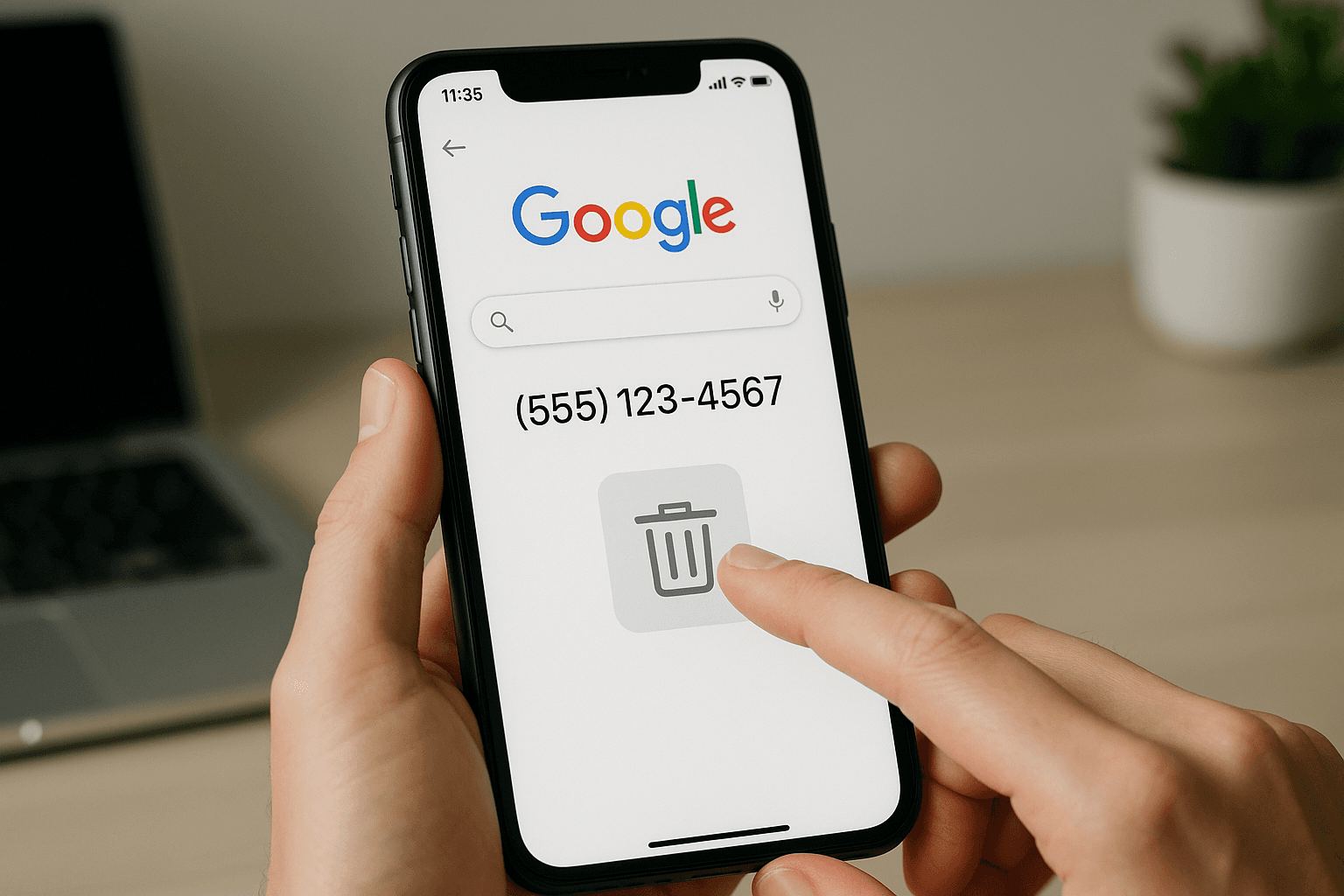
To remove your phone number from Google search results, start by deleting the source content where your number appears, then submit removal requests through Google’s Removals Tool for specific URLs. You can also contact website owners directly to remove your information, request de-indexing for sensitive personal data, and adjust privacy settings on social media and directory sites where your number might be listed. The process typically takes several days to weeks, depending on the removal method and cooperation from site owners.
Why Your Phone Number Appears on Google
Your phone number ends up in Google search results through multiple channels. Social media profiles often display contact information publicly by default. Online directories and business listings aggregate personal data from public records, user submissions, and data brokers. Your number might appear in forum posts, blog comments, classified ads, or even leaked databases that get indexed. Understanding where your information originates helps you address the problem at its source rather than playing an endless game of removal requests.
Google doesn’t create this content but indexes what already exists on the web. When someone searches your phone number, Google displays pages where that number appears. This means effective removal requires a two-pronged approach: eliminating the original source and requesting Google to update its index.
Remove the Source Content First
The most effective strategy starts with removing your phone number from the original websites where it appears. Search your phone number on Google with quotation marks around it to see all indexed pages containing your exact number. Make a list of every URL where your information appears.
For websites you control, log in and delete your phone number from profile pages, contact forms, and any posts or comments where you shared it. For social media platforms, navigate to privacy settings and remove your phone number from public view or delete it entirely. Many platforms like Facebook, LinkedIn, and Twitter allow you to hide contact information from search engines even if you keep it visible to connections.
When your number appears on sites you don’t control, look for a “Contact Us” page or privacy request form. Many websites, especially those operating under regulations like the FTC’s privacy guidelines, maintain processes for removing personal information upon request. Send a polite but direct message explaining you want your phone number removed, include the specific URL where it appears, and request confirmation once they complete the removal.
Use Google’s Official Removal Tools
After removing content from source websites, use Google’s Removals Tool to expedite the de-indexing process. Visit the Google Search Central Removals Tool and sign in with your Google account. This tool offers different removal options depending on your situation.
For content you control, select “New Request” and choose “Remove content you own from Google.” Enter the URL where your phone number appeared, and Google will process the request once they verify you’ve removed the content from the source page. This typically takes a few days.
For content on sites you don’t control, Google provides limited removal options for specific categories of sensitive personal information. Under the “Remove information from Google” section, you can request removal of certain types of personally identifiable information that create significant risks of identity theft, financial fraud, or other specific harms. Google evaluates these requests individually and balances removal requests against public interest considerations.
Request Outdated Content Removal
If a website owner has already removed your phone number but it still appears in Google’s cached results or search snippets, use the “Remove outdated content” option. This tells Google to crawl the page again and update their index. Provide the URL and explain that the content has been removed or changed. Google usually processes these requests within a few days, though complex cases may take longer.
Contact Data Broker and Directory Sites
People search engines and data broker websites represent some of the most persistent sources of phone number exposure. Companies like Whitepages, Spokeo, BeenVerified, and dozens of others compile personal information from public records and sell access to it. Each site maintains its own opt-out process, usually buried in privacy policy pages or help sections.
Visit each directory site individually and search for your phone number to confirm they have your information. Navigate to their opt-out or removal request page, which may require you to verify your identity through email confirmation or by providing additional personal details. Some sites process removals within 24-48 hours, while others take several weeks. Mark your calendar to check back, as some data brokers re-add information after periodic updates from their data sources.
This process proves tedious because hundreds of these sites exist. Focus first on the major players that appear prominently in search results for your number. Consider using a privacy service that handles mass opt-outs if you discover your information spread across many platforms, though these services typically charge fees for their assistance.
Address Public Records and Legal Documents
Phone numbers appearing in court records, property deeds, business registrations, or other government documents present unique challenges. These records exist in the public domain, and while you cannot remove them from government databases, you may be able to request that certain sites remove or redact your information from their copies of these documents.
Contact the specific website hosting the document and cite privacy concerns. Some legal information sites and document repositories honor removal requests for non-essential personal contact information, especially when no compelling public interest justifies displaying your phone number. Government agencies themselves rarely remove information from official public records, but third-party sites that republish this data sometimes prove more flexible.
Prevent Future Exposure
Once you’ve cleaned up existing listings, adopt practices to prevent your phone number from reappearing in search results. Review privacy settings across all social media accounts and set contact information to “Only Me” or “Friends” rather than “Public.” When creating new accounts, avoid entering your phone number unless absolutely necessary, or use a secondary number specifically for online registrations.
Google Voice provides a free alternative phone number that forwards to your real number, giving you a buffer for online services and websites. If that number becomes compromised or spam-ridden, you can easily change it without updating your actual phone number everywhere.
Register for the National Do Not Call Registry to reduce telemarketing calls, though this won’t remove your number from search results. Check your phone number periodically by searching it in quotation marks on Google to catch new listings early, when they’re easier to address.
Legal Options for Persistent Cases
When standard removal methods fail and your phone number continues appearing despite your efforts, legal avenues exist. The Federal Trade Commission offers guidance on removing personal information from the internet and filing complaints against companies that refuse reasonable privacy requests.
Some states enacted stronger privacy laws giving residents explicit rights to request deletion of personal information. California’s Consumer Privacy Act and similar legislation in other states provide legal backing for removal requests. If a business falls under these regulations and refuses your request without valid justification, you can file complaints with your state’s attorney general or consumer protection office.
For cases involving harassment, stalking, or immediate safety concerns, law enforcement and the courts may intervene to compel removal of your contact information from specific websites. Document everything, including dates you made removal requests and any responses or lack thereof from website operators.
Monitor and Maintain Your Privacy
Removing your phone number from Google isn’t a one-time task but an ongoing process. New websites constantly scrape and republish data, and information you thought was removed sometimes reappears. Set up Google Alerts for your phone number to receive notifications when it appears on newly indexed pages. Perform manual searches monthly to catch listings that might not trigger alerts.
When you spot your number in new locations, act quickly. Fresh listings are easier to remove than aged content that has spread across multiple platforms. Keep a log of removal requests with dates, confirmation numbers, and follow-up deadlines to stay organized when managing multiple requests simultaneously.
Frequently Asked Questions
How long does it take for Google to remove my phone number from search results?
The timeline varies significantly based on the removal method. If you delete content from a page you control and request removal through Google’s tool, the process typically takes 1-3 days. For outdated content removal where the source site already removed your information, expect 5-7 days. Requests for removing sensitive personal information that require manual review can take several weeks. Even after Google processes your request, cached versions might persist for a short period before completely disappearing from all search results.
Can I remove my phone number if someone else posted it without my permission?
Yes, though the process requires extra steps. First, contact the website owner or administrator and request removal, explaining that someone posted your personal information without consent. If they refuse or don’t respond, use Google’s “Request to remove personal information” option for sensitive data. For cases involving harassment or doxxing, report the content to the platform’s abuse team and consider filing a legal complaint. Google cannot remove content from other websites but may de-index pages containing certain types of sensitive personal information that create specific harm risks.
Will removing my phone number from Google affect my business listings?
If you operate a business, you likely want your business phone number to appear in search results for customer contact purposes. The removal strategies should target only personal listings of your private number, not legitimate business contact information. Google Business Profile listings and professional directories serve valid business purposes. Focus removal efforts on data broker sites, personal social media profiles set to public, or other contexts where your personal number appears outside business purposes. You maintain complete control over your Google Business Profile and can update or change contact information anytime.
Do paid removal services actually work?
Paid privacy and reputation management services can be effective but aren’t necessary for most people. These services primarily automate and manage the opt-out process across many data broker sites simultaneously, saving you time but not doing anything you couldn’t do yourself for free. They prove most valuable when your information appears on dozens of sites and you lack time to handle individual removal requests. However, some services make promises they cannot keep, particularly regarding permanent removal or guaranteed results. Research any service thoroughly, read reviews, and understand exactly what they will and won’t do before paying.
What should I do if my phone number keeps reappearing after removal?
Persistent reappearance typically indicates that data brokers are periodically refreshing their databases from source records or that your number continues appearing somewhere Google can crawl it. Search for your number comprehensively and identify all remaining sources. Focus on permanent removal from source databases rather than just Google’s index. Consider whether your number appears in public records that feed data broker sites, and explore whether those source records can be sealed or redacted. For websites that restore your information after removal, send formal written requests citing applicable privacy laws in your jurisdiction, and document everything in case legal action becomes necessary.
Can I prevent Google from indexing my phone number in the future?
You cannot directly tell Google to never index your phone number, but you can prevent it from appearing in indexable locations. Use strict privacy settings on all social media and online accounts. When possible, use alternative contact methods or secondary phone numbers for online registrations. Website owners can use the noindex meta tag on pages containing your information to prevent Google from indexing those specific pages, though you would need to convince site administrators to implement this. The most reliable prevention method is simply keeping your phone number off public-facing web pages entirely and only sharing it through private communication channels.
Does removing my number from Google stop spam and scam calls?
Removing your number from Google search results helps reduce exposure but won’t eliminate spam calls entirely. Scammers and telemarketers obtain phone numbers from many sources beyond Google, including leaked databases, random number generation, and purchased lists from data brokers. However, reducing your number’s visibility online does limit one avenue for scammers to find and validate active numbers. Combine removal efforts with other protective measures like registering on the Do Not Call list, using call screening features on your smartphone, and never answering calls from unknown numbers to comprehensively reduce unwanted calls.
Related Articles
 How To
How to Report Scam Calls and Robocalls
TL;DR Report scam calls to the Federal Trade Commission through their online complaint form or by phone at 1-877-382-4357, and forward robocalls to 7726 (SPAM) to help your carrier identify and block fraudulent numbers. You should also report violations to the Federal Communications Commission, your state attorney general, and consider registering your number on the […]
 How To
How to Block Spam Calls on iPhone and Android
TL;DR Blocking spam calls on your smartphone involves using built-in features like Silence Unknown Callers on iPhone or Call Screen on Android, along with carrier-provided spam protection services. Both platforms let you manually block numbers, report spam, and download third-party call-blocking apps for enhanced protection. The most effective approach combines multiple methods: enabling system-level spam […]
 How To
How to Check a Suspicious Text Message Number
TL;DR To check a suspicious text message number, start by conducting a reverse phone lookup using services like WhitePages or Truecaller, search the number online to see if others have reported it as spam, and verify any claims independently by contacting the supposed sender through official channels. Never click links or share personal information from […]