What Can an Area Code Tell You About a Phone Number?

By Razib
TL;DR
An area code reveals the geographic region where a phone number was originally assigned, whether it’s a landline or mobile number, and can help identify potential spam or scam calls. While area codes once definitively indicated a caller’s physical location, number portability and VoIP services have made this information less reliable. Area codes can still provide valuable clues about unfamiliar callers, help you recognize local versus long-distance calls, and serve as an initial screening tool for unwanted communications.
Geographic Location and Regional Identity
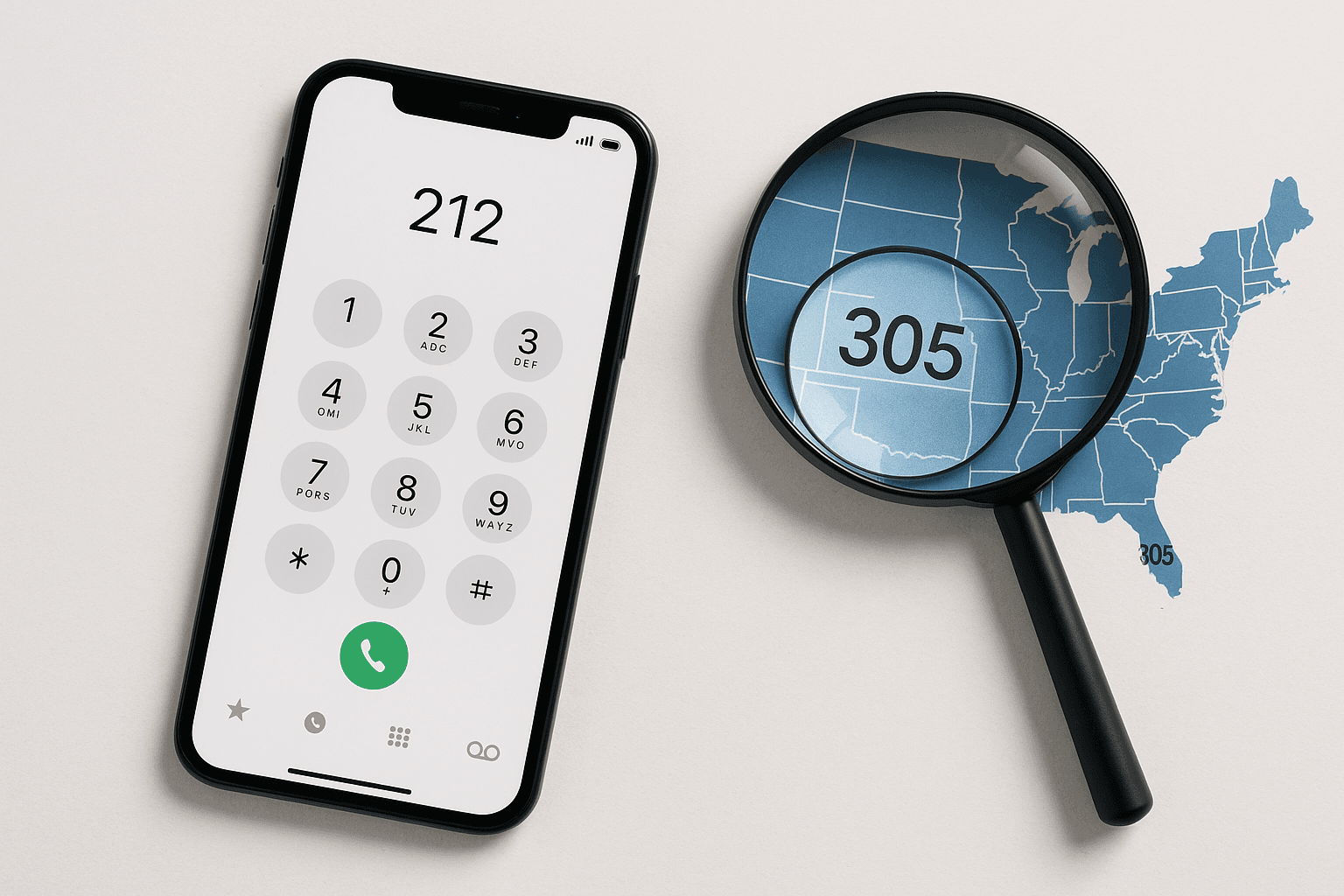
The most fundamental piece of information an area code provides is geographic origin. When the North American Numbering Plan was established in 1947, area codes were designed to divide the United States, Canada, and several other territories into distinct regions. Each three-digit area code corresponds to a specific geographic area, ranging from entire states or provinces to portions of major metropolitan areas. For example, area code 212 represents Manhattan in New York City, while 907 covers the entire state of Alaska.
This geographic coding system allows you to immediately recognize where a phone number originated. If you receive a call from area code 305, you know it was assigned in Miami-Dade County, Florida. Similarly, 415 indicates San Francisco, and 312 points to downtown Chicago. This information becomes particularly useful when you’re expecting calls from specific regions or trying to determine whether an unfamiliar number might be legitimate based on its location.
However, the relationship between area codes and geography has become more complex over time. As population growth and the proliferation of mobile devices exhausted available numbers in certain regions, overlay area codes were introduced. In these cases, multiple area codes serve the same geographic region. Los Angeles, for instance, has numerous overlapping area codes including 213, 323, 310, 424, and 818, all serving different parts of the metropolitan area or sharing the same territory.
Landline Versus Mobile Classification
While area codes don’t explicitly distinguish between landlines and mobile phones in North America, they can provide context clues about the type of line. Unlike many countries that assign specific prefixes to mobile numbers, the United States and Canada use the same numbering format for both landlines and mobile devices. This means a number with area code 617 could belong to either a Boston-area landline or a mobile phone that was originally activated in that region.
The inability to distinguish mobile from landline numbers based on area code alone has practical implications. Businesses cannot automatically identify whether they’re calling a mobile device, which matters for compliance with regulations governing automated calls and text messages. Similarly, individuals cannot assume that a call from a local area code is coming from a traditional landline business versus a mobile user.
That said, newer area codes created specifically to accommodate mobile phone growth may statistically have higher concentrations of mobile numbers. When an area code is introduced or overlaid to address number exhaustion driven primarily by cellular adoption, many of those numbers will naturally be assigned to mobile carriers rather than landline providers.
Number Portability Limitations
The introduction of local number portability in 2003 fundamentally changed what area codes can tell you about current phone number ownership. This regulatory requirement allows consumers to keep their phone numbers when switching service providers or moving between landline and wireless services within the same geographic area. More significantly, many carriers now allow customers to retain their numbers even when relocating to different regions entirely.
This portability means that someone with a 404 Atlanta area code might have moved to Seattle years ago but kept their original number. College students often maintain their hometown area codes throughout their years away at school and sometimes permanently. Business professionals who relocate frequently may prefer to keep a single number for consistency, regardless of where they physically reside.
The practical consequence is that an area code now indicates only where a number was initially assigned, not necessarily where the current user lives or operates. When you receive a call from an unfamiliar area code, you cannot definitively conclude the caller’s present location. This uncertainty complicates efforts to screen calls based on geographic relevance and makes area codes less useful for confirming a caller’s claimed location.
Identifying Potential Scams and Spam
Area codes have become an important tool for recognizing potential scam calls and unwanted solicitations. Certain patterns in area code usage can signal suspicious activity. One common scam technique involves “neighbor spoofing,” where scammers manipulate caller ID to display a number with the same area code and sometimes even the same three-digit prefix as your own number. The psychology behind this tactic is that people are more likely to answer calls that appear to originate from their local area.
According to the Federal Trade Commission’s consumer guidance, unexpected calls from unfamiliar numbers in your area code deserve extra scrutiny, especially if you don’t recognize the specific number. Legitimate local businesses or contacts you actually know would typically be saved in your phone’s contact list.
Certain area codes have also gained reputations as sources of robocalls and telemarketing due to the concentration of call centers or VoIP services operating from those regions. Some scammers use obscure or rarely-seen area codes to pique curiosity and encourage callbacks, sometimes leading to premium-rate numbers that charge high fees. Being familiar with common scam area codes and patterns helps you make informed decisions about which calls to answer or return.
VoIP and Virtual Numbers
Voice over Internet Protocol services have further complicated the relationship between area codes and physical location. VoIP providers allow users to select virtually any available area code when establishing service, regardless of where they actually live or operate. A business operating entirely in Texas could choose a New York City area code to establish a presence in that market, or an individual living in Florida might select a California area code for personal reasons.
Virtual phone services, commonly used by remote workers, distributed businesses, and privacy-conscious individuals, make area codes even less meaningful as location indicators. These services can provide local numbers in dozens or hundreds of area codes simultaneously, routing calls through the internet to wherever the user happens to be. This flexibility is valuable for legitimate business purposes but also creates opportunities for deceptive practices.
The proliferation of VoIP technology means that receiving a call from a specific area code provides almost no certainty about where the call actually originates. International scammers can easily obtain US area codes through VoIP services, making their calls appear domestic. This technological reality requires consumers to look beyond area codes when assessing call legitimacy and to rely on additional verification methods.
Toll-Free and Special Service Codes
Beyond standard geographic area codes, special three-digit codes provide specific information about the nature of a phone number. Toll-free numbers using area codes 800, 888, 877, 866, 855, 844, and 833 indicate that the called party pays for the call rather than the caller. These numbers are commonly associated with customer service lines, business hotlines, and national organizations.
Premium-rate area codes like 900 signal that calls will incur charges beyond standard rates, typically used for entertainment services, technical support, or information lines. The 411 directory assistance code and 511 traveler information service represent other specialized uses. Area code 710 is reserved for federal government use, while 456 is designated for inbound international calls.
Recognizing these special codes helps you understand what type of service you’re calling or being called by, potential costs involved, and the general nature of the organization behind the number. While they don’t reveal geographic location like standard area codes, they provide different but equally useful information about phone number purpose and ownership.
Historical and Cultural Context
Area codes carry historical significance and cultural associations that extend beyond their technical function. Original area codes assigned in 1947 followed a system where states or regions with the highest call volumes received codes that were fastest to dial on rotary phones. This is why New York received 212, Los Angeles got 213, and Chicago was assigned 312—all featuring low numbers that required less time to dial.
Certain area codes have developed prestige or recognition that affects their desirability. Manhattan’s 212 area code is highly coveted and has become a status symbol, with new assignments extremely rare. Similarly, area codes associated with major cultural or economic centers often carry more cachet than those from less prominent regions. This has created a secondary market where desirable numbers in specific area codes command premium prices.
The cultural identity associated with area codes means they can tell you something about how a business or individual wishes to be perceived. A company choosing to maintain a Silicon Valley area code even after relocating signals its connection to tech industry prestige. Someone proudly keeping their hometown area code after moving away demonstrates attachment to their roots. These subtle social signals add another dimension to what area codes communicate beyond pure geography.
Frequently Asked Questions
Can I determine if a phone number is a cell phone or landline from the area code alone?
No, you cannot distinguish between cell phones and landlines based solely on the area code in North America. Unlike some countries that assign specific prefixes to mobile numbers, the United States and Canada use the same numbering system for both landlines and mobile devices. You would need to use a specialized phone number lookup service or carrier database to determine the line type associated with a specific number.
Does an area code tell me where someone is currently located?
Not reliably. While area codes indicate where a phone number was originally assigned, number portability allows people to keep their numbers when moving to different regions or switching carriers. Additionally, VoIP services let users select area codes unrelated to their physical location. An area code shows only the original assignment location, not the current user’s whereabouts.
Why do I receive calls from my own area code that I don’t recognize?
This is likely “neighbor spoofing,” a common scam tactic where callers manipulate caller ID to display a number with your area code and sometimes your prefix. Scammers use this technique because people are more inclined to answer calls that appear local. If you don’t recognize the specific number and weren’t expecting a call, approach these with caution regardless of the familiar area code.
Are certain area codes more associated with spam calls than others?
While spam can originate from any area code, some patterns emerge due to concentrations of call centers or VoIP services in certain regions. However, scammers frequently spoof area codes to appear local to their targets, so the displayed area code may not reflect the actual origin. The content and context of the call matters more than the area code for identifying spam.
What do area codes starting with 8 mean?
Area codes beginning with 8 are toll-free numbers, where the receiving party pays for the call rather than the caller. These include 800, 888, 877, 866, 855, 844, and 833. They’re commonly used by businesses for customer service, sales lines, and support hotlines. These codes don’t represent geographic locations but indicate a billing arrangement and typically suggest a business or organizational number.
Can businesses have area codes from regions where they don’t operate?
Yes, particularly with VoIP services. Businesses can obtain phone numbers with area codes from regions where they have no physical presence to create a local appearance in markets they serve remotely. This is completely legal and common for distributed companies, remote workers, and businesses expanding their geographic reach without opening physical offices.
How can I find out what region an unfamiliar area code represents?
You can look up area codes through various online directories and databases that map area codes to their assigned geographic regions. Many websites and mobile apps provide this information, showing you which state, province, or metropolitan area a particular area code serves. Keep in mind this shows only the assignment region, not necessarily where the current caller is located.
Related Articles
 Phone Lookup
International Phone Number Lookup Explained
TL;DR International phone number lookup is a process that identifies the origin, carrier, and sometimes the owner of a phone number from anywhere in the world. These services use databases containing information about phone number allocations, country codes, and telecommunications data to provide details about callers before you answer or return calls. While basic information […]
 Phone Lookup
Can You Look Up a Toll-Free Phone Number?
TL;DR Yes, you can look up toll-free phone numbers through several reliable methods. The most effective approaches include using reverse phone lookup services, searching the official databases maintained by toll-free number administrators, checking company websites directly, or consulting the Better Business Bureau. While toll-free numbers are publicly available, finding detailed ownership information may require contacting […]
 Phone Lookup
How Number Porting Affects Reverse Phone Lookup Results
TL;DR Number porting allows phone users to transfer their existing phone number from one carrier to another, which creates significant challenges for reverse phone lookup services. When a number is ported, the original carrier information stored in databases becomes outdated, leading to inaccurate results that may show the old carrier instead of the current one. […]