International Phone Number Lookup Explained

By Razib Mojumder
TL;DR
International phone number lookup is a process that identifies the origin, carrier, and sometimes the owner of a phone number from anywhere in the world. These services use databases containing information about phone number allocations, country codes, and telecommunications data to provide details about callers before you answer or return calls. While basic information like country and carrier is typically available, obtaining personal details about the number’s owner often requires specialized services and must comply with privacy regulations in different jurisdictions.
Understanding International Phone Numbers
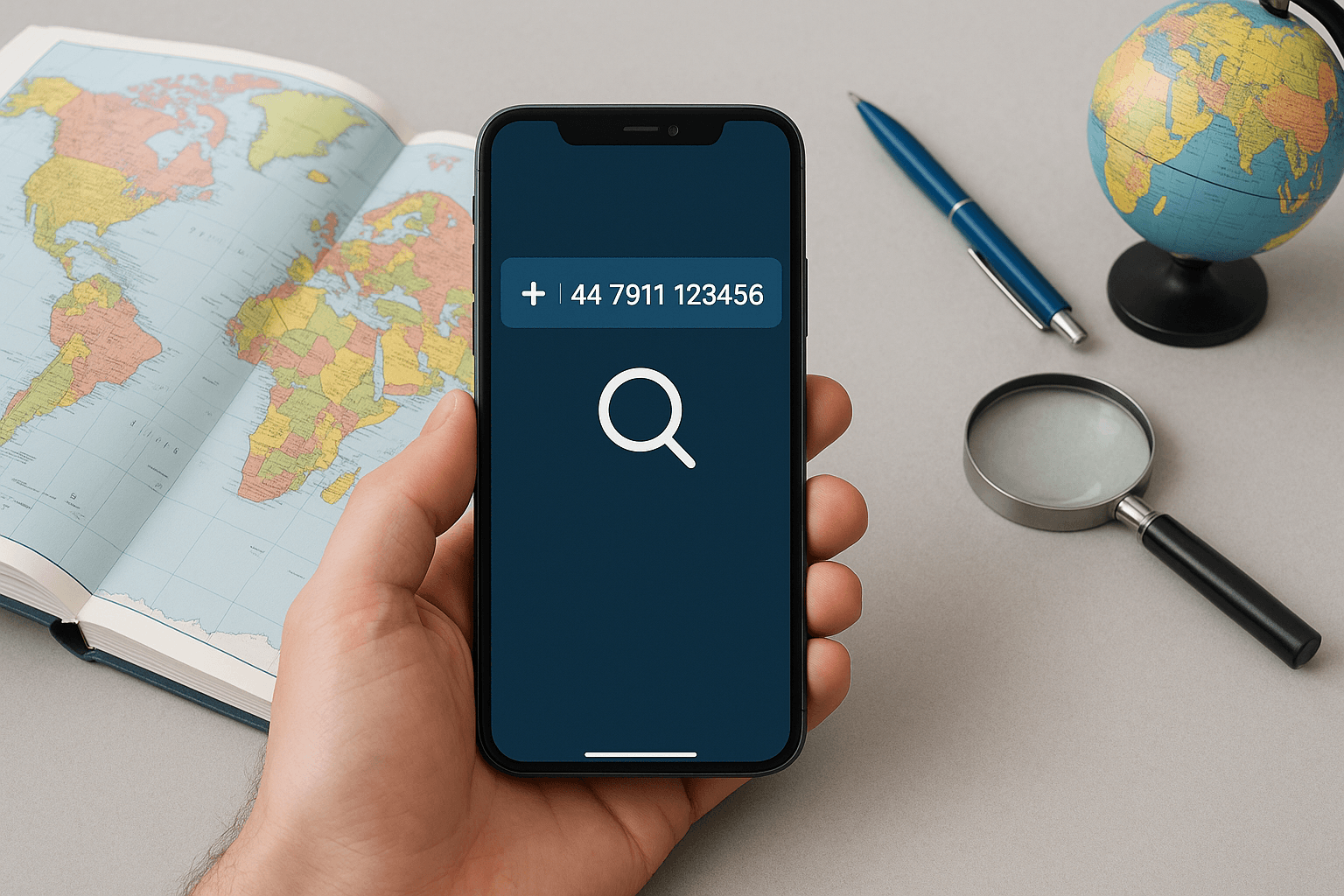
International phone numbers follow a standardized format established by the International Telecommunication Union (ITU), beginning with a plus sign (+) followed by a country code, area code, and local subscriber number. This structure allows for unique identification of telephone lines across the globe. When you receive a call from an unfamiliar international number, the country code provides the first clue about its origin—for instance, +44 indicates the United Kingdom, +81 represents Japan, and +234 is Nigeria.
The length and format of international numbers vary significantly by country. Some nations like the United States use ten digits after the country code (+1), while others may have shorter or longer sequences. Understanding this structure is essential when attempting to verify or look up international numbers, as the formatting provides critical information for database searches.
How International Phone Number Lookup Works
Phone number lookup services operate by cross-referencing the number against multiple databases that contain telecommunications information. When you enter an international number, the service first parses the country code to determine the originating nation, then accesses databases maintained by telecommunications authorities and carriers in that region. These databases include information about which carrier operates specific number ranges, the geographic region associated with the number, and whether it’s a mobile or landline connection.
Many lookup services tap into publicly available data from numbering authorities in each country. The ITU’s numbering resources provide foundational information about how numbers are allocated globally. Commercial lookup providers enhance this data with proprietary databases built from user reports, public directories, and partnerships with telecommunications providers worldwide.
Advanced lookup services can sometimes identify whether a number has been associated with spam, scam operations, or legitimate businesses based on user-submitted reports and pattern recognition. This crowdsourced element has become increasingly valuable as international phone scams have proliferated in recent years.
Types of Information Available Through Lookup Services
The scope of information obtainable through international phone number lookup varies based on the service used and the privacy laws governing the number’s country of origin. Basic lookups typically reveal the country and city of origin, the telecommunications carrier, and whether the line is mobile or fixed. This level of information is generally accessible without privacy concerns since it relates to infrastructure rather than individuals.
More comprehensive services may provide caller identity information, but this depends heavily on whether the number is listed in public directories or business registries. In countries with strict privacy protections, obtaining personal information about residential phone subscribers is restricted or prohibited entirely. Business numbers, conversely, are often publicly searchable since companies typically list their contact information for customer access.
Some specialized services offer reverse lookup capabilities that search social media profiles, public records, and online mentions associated with a phone number. These services aggregate digital footprints to build profiles, though their accuracy and completeness vary considerably. Users should approach such detailed lookups with caution regarding both accuracy and ethical considerations.
Legal and Privacy Considerations
International phone number lookup exists within a complex legal framework that differs across jurisdictions. The European Union’s General Data Protection Regulation (GDPR) imposes strict limitations on collecting and processing personal data, including phone numbers, which affects what information lookup services can legally provide about EU residents. Similar privacy frameworks exist in countries like Canada, Australia, and Brazil, each with specific requirements for data handling and consent.
In the United States, telecommunications privacy is governed by various regulations, and the Federal Communications Commission oversees many aspects of telephone number administration. While Americans generally have fewer privacy protections than Europeans regarding phone number data, legitimate lookup services still operate within bounds set by consumer protection laws and industry standards.
Users conducting international phone lookups should be aware that accessing certain types of information without proper authorization may violate laws in either their own country or the country where the number originates. Legitimate uses generally include verifying business contacts, screening potential spam or fraud, and confirming the identity of expected callers. Using lookup services for stalking, harassment, or unauthorized marketing crosses legal and ethical boundaries.
Practical Applications and Use Cases
International phone number lookup serves numerous practical purposes in both personal and professional contexts. Businesses with global operations regularly use these services to verify customer contact information, screen incoming calls from international clients, and detect fraudulent activity. When a company receives orders or inquiries from unfamiliar international numbers, lookup services help confirm legitimacy before proceeding with transactions.
Individual users benefit from lookup services primarily for security purposes. International scam calls have become increasingly sophisticated, with fraudsters spoofing legitimate-looking numbers from various countries. By looking up an unfamiliar international number before answering or returning a call, you can often identify known scam operations or determine whether the call might be legitimate based on the carrier and location information.
Journalists, investigators, and researchers sometimes use international phone lookups as part of broader information-gathering efforts. When combined with other research methods and used responsibly, these tools can help verify sources, trace communication networks, and uncover connections relevant to investigations. However, such professional uses require careful attention to legal requirements and ethical standards.
Choosing a Reliable Lookup Service
The market for international phone lookup services includes both free and paid options, with significant variation in quality, coverage, and accuracy. Free services typically offer basic information limited to country codes, carriers, and general location data. While useful for quick checks, they may have outdated databases or incomplete coverage of certain regions.
Paid services generally provide more comprehensive data, regular database updates, and better coverage of international numbers. When evaluating paid services, consider factors like the geographic coverage relevant to your needs, the freshness of their data, user reviews regarding accuracy, and transparent privacy policies. Reputable services clearly explain what information they collect, how they use it, and their compliance with international privacy regulations.
Be wary of services making unrealistic promises about the level of personal detail they can uncover. Legitimate providers acknowledge the limitations imposed by privacy laws and the varying availability of data across different countries. Services claiming to provide complete personal dossiers on any number worldwide are likely either exaggerating their capabilities or operating in legally questionable ways.
Limitations and Challenges
International phone number lookup faces inherent limitations that users should understand. Database accuracy depends on telecommunications authorities regularly updating number allocations, but administrative delays mean some newly assigned numbers may not appear correctly in lookup databases immediately. Additionally, number portability—where users keep their numbers when switching carriers—can result in carrier information being outdated.
Virtual phone numbers and Voice over IP (VoIP) services present particular challenges for lookup accuracy. These numbers may display location information based on where the service provider is registered rather than where the user physically resides. This disconnect between displayed location and actual user location complicates efforts to verify caller legitimacy based solely on geographic information.
Caller ID spoofing technology allows scammers to disguise their actual number by displaying a different one on recipient devices. While lookup services can identify the displayed number’s characteristics, they cannot necessarily reveal when spoofing has occurred. This limitation means lookup results should be considered one data point among several when assessing caller legitimacy.
Frequently Asked Questions
Can I find out who owns an international phone number for free?
Free lookup services typically provide basic information like the country, region, and carrier associated with an international number, but rarely identify the specific owner. Personal ownership information is protected by privacy laws in most countries and generally requires the number to be listed in public directories or business registries. Even paid services have limited access to owner information due to legal restrictions, particularly for mobile numbers and residential lines in privacy-conscious jurisdictions.
Are international phone number lookups legal?
Looking up basic information about international phone numbers is generally legal when using legitimate services that access publicly available telecommunications data. However, laws vary by country regarding what information can be disclosed and for what purposes. Using lookup information for harassment, stalking, unauthorized marketing, or other illegal activities violates laws in most jurisdictions. Always ensure your use of lookup services complies with both your local laws and the laws of the country where the number originates.
How accurate are international phone number lookup services?
Accuracy varies significantly between services and depends on factors like database freshness, geographic coverage, and the type of number being searched. Basic information about country codes and major carriers is generally highly accurate, while details about specific owners or precise locations may be less reliable. Numbers associated with VoIP services, virtual phone providers, or recently ported between carriers often produce less accurate results. Reputable services typically achieve 70-90% accuracy for carrier and location data in well-documented regions.
Why do some international numbers not appear in lookup databases?
Several factors can cause international numbers to be absent from lookup databases. Newly allocated numbers may not yet be registered in publicly accessible databases due to administrative delays. Numbers from countries with limited telecommunications transparency or those with less developed digital infrastructure may have sparse database coverage. Additionally, some private or government numbers are intentionally unlisted, and virtual numbers or temporary disposable numbers from certain services may not be tracked in standard databases.
Can international phone lookup services identify spam or scam calls?
Many modern lookup services incorporate spam detection features based on user-reported data and pattern recognition algorithms. When multiple users report a specific international number as spam or fraudulent, this information gets added to crowdsourced databases that lookup services access. However, scammers frequently change numbers or use spoofing techniques, so the absence of spam reports doesn’t guarantee a call is legitimate. Lookup services work best as one component of a broader approach to identifying suspicious calls.
What’s the difference between international phone lookup and reverse phone lookup?
The terms are often used interchangeably, but technically international phone lookup refers specifically to searching numbers with country codes outside your own region, while reverse phone lookup is the general process of searching any number to discover information about it. International lookups face additional complexities due to varying regulations, database availability, and telecommunications standards across countries. A reverse lookup of a domestic number typically yields more detailed results than an international lookup due to better database coverage and fewer cross-border legal restrictions.
Do I need special software to perform international phone number lookups?
Most international phone number lookup services operate through web-based interfaces that require only a browser and internet connection. Simply enter the number in international format (with the plus sign and country code) into the service’s search field. Some providers offer mobile apps or browser extensions for convenient access, and businesses with high lookup volumes might use API integrations. Specialized software is unnecessary for occasional personal lookups, though professional users may benefit from tools that automate bulk searches or integrate lookup capabilities into existing systems.
Editorial Standards & Fact Checking
At NumLocate, our telecommunications and privacy guides are independently researched, cross-referenced with official FCC guidelines and carrier numbering plans, and reviewed to ensure consumer safety and accuracy.

Written by Razib Mojumder
Telecommunications & Digital Privacy Specialist
Razib is the lead researcher at NumLocate, specializing in caller ID authentication protocols, STIR/SHAKEN anti-spoofing frameworks, and practical digital privacy tools for everyday consumers.
Related Articles
 Phone Lookup
What Does Scam Likely Mean on Caller ID?
TL;DR “Scam Likely” on your caller ID is a warning label that your phone carrier automatically displays when an incoming call is suspected to be fraudulent or a scam. Major carriers like T-Mobile, AT&T, and Verizon use call analytics technology to identify suspicious calling patterns and flag these numbers before you answer. When you see […]
 Phone Lookup
Why Do Old Phone Numbers Have New Owners?
TL;DR Old phone numbers get reassigned to new owners because telecommunications carriers recycle disconnected numbers after a waiting period to manage the limited supply of available phone numbers. When someone cancels their service, switches carriers, or stops paying their bill, their number enters a holding period before returning to the available pool. This recycling process […]
 Phone Lookup
What Can an Area Code Tell You About a Phone Number?
TL;DR An area code reveals the geographic region where a phone number was originally assigned, whether it’s a landline or mobile number, and can help identify potential spam or scam calls. While area codes once definitively indicated a caller’s physical location, number portability and VoIP services have made this information less reliable. Area codes can […]